
By NaJade · DJ in Bangkok · Published September 29, 2026
The gear you’ll wear for every hour of every set — and the purchase DJs most often get wrong by shopping like a music fan instead of a working DJ. Here’s the whole landscape.
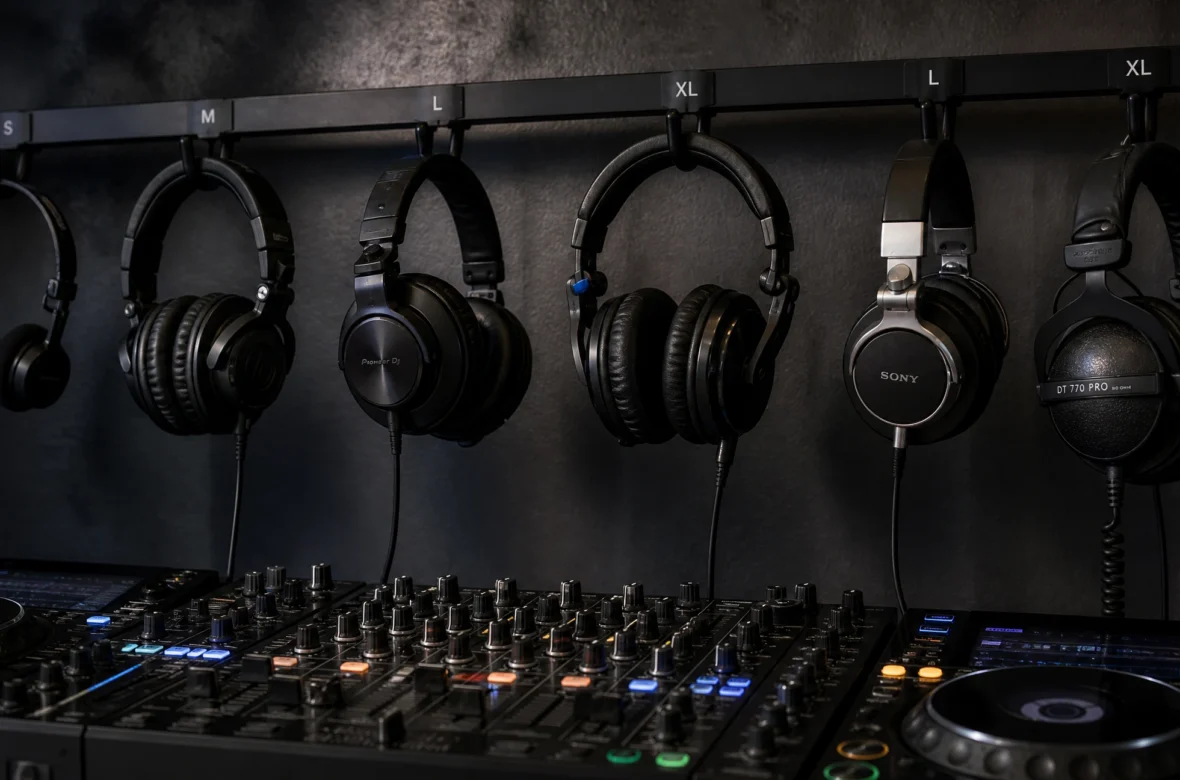
DJ headphones are not consumer headphones with a different sticker. They have a specific job: surviving loud booths, isolating your cue from a pounding room, taking one-ear monitoring abuse night after night, and telling you the truth about a kick drum so you can beatmatch fast. This guide maps the headphones that actually matter — the industry-standard Sennheiser HD 25, Pioneer’s flagship and budget options, the studio crossovers — plus the monitors question, and the specs that genuinely matter versus the ones that don’t. If you’re brand new, my beginner headphones guide covers the basics; this is the full landscape.
Great DJ headphones need four things: isolation from a loud room, durability under one-ear monitoring, clear punchy low-end for beatmatching, and comfort over long sets. The Sennheiser HD 25 (~$150) is the industry standard; the Pioneer HDJ-X10 (~$350) is the premium over-ear flagship; the HDJ-CUE1 (~$69) is the budget gateway; the ATH-M50x is the studio crossover. Fashion headphones fail in booths — buy tools, not accessories.
What Makes a DJ Headphone Different
- Isolation. A club hits 100dB+. Closed-back designs with strong passive isolation (the HD 25 manages roughly 30dB) let you hear your cue without cranking volume to ear-damaging levels.
- One-ear durability. DJs twist, swivel, and hang headphones off one ear for hours. Rotating cups, swivel joints, and — crucially — replaceable parts decide how long they live.
- A truthful low end. You beatmatch on kick drums. Overly boosted consumer bass smears the very frequencies you need to hear precisely.
- Volume handling. DJ headphones are built to play loud without distorting — high maximum SPL matters in a way it never does at home.
- Serviceability. Cables and pads are the first things to die. Detachable cables and cheap replacement pads turn a repair into a five-minute job instead of a new purchase.
The Headphones Worth Knowing
| Model | Type | Rough price | Best for |
|---|---|---|---|
| Sennheiser HD 25 | On-ear, closed | ~$150 | The industry standard; booth workhorse |
| Pioneer HDJ-X10 | Over-ear, closed | ~$350 | Premium flagship; comfort + detail |
| Pioneer HDJ-CUE1 | Compact over-ear | ~$69 | Budget gateway; beginners |
| Audio-Technica ATH-M50x | Over-ear, closed | ~$149 | DJ + studio crossover |
| V-Moda M-100 Master | Over-ear, closed | ~$249 | Durability; bass-forward EDM tuning |
The Big Four, Briefly
Sennheiser HD 25 — the standard
Thirty-plus years in booths, broadcast trucks, and festival stages, and still the default answer. Featherweight, brutally isolating, every part replaceable. Full HD 25 guide.
Pioneer HDJ-X10 — the flagship
Pioneer’s top over-ear: 50mm drivers, 5Hz–40kHz response, military-grade shock testing, and the most comfortable fit in the range. Full HDJ-X10 guide.
Pioneer HDJ-CUE1 — the gateway
Pioneer’s cheapest-ever DJ headphone, sharing drivers with the pricier HDJ-X5, folding into its own headband, with colourful customisation packs. Full HDJ-CUE1 guide.
The studio crossovers
The Audio-Technica ATH-M50x is the do-everything option for DJs who also produce, and the V-Moda M-100 Master is the road-warrior choice with a bass-forward tuning EDM DJs love. Guides to both are linked.
On-Ear or Over-Ear?
The genuine fork in the road. On-ear (HD 25) is lighter, cooler in hot booths — no small thing in Bangkok — and easier to slip on and off one ear all night, at the cost of pressing on your ears. Over-ear (HDJ-X10, M50x) seals around the ear for comfort over long sessions and often richer perceived sound, but runs hotter and bulkier. Neither is wrong; DJs split roughly down the middle, and it’s worth trying both styles on before committing to an expensive pair.
And What About Speakers?
Headphones are half your monitoring; the other half is what fills the room while you practise. Mixing exclusively on headphones teaches you habits that fall apart on real speakers — you need to hear how your blends sit in air. My studio monitors for DJs guide covers the affordable options (including the KRK Rokit and Yamaha HS5) and how to set them up in a normal room.
A Note From NaJade
Two pieces of hard-won advice. First: buy boring. The headphones that survive DJ life are the unglamorous professional tools with replaceable parts, not the beautiful consumer pairs with sealed batteries and fashion branding — I’ve watched too many expensive lifestyle headphones die their first month of real booth work. Second: don’t over-spend early. A $69 pair like the CUE1 teaches you beatmatching exactly as well as a $350 flagship; upgrade when you’re gigging regularly and can name what’s frustrating you — usually isolation or comfort, and by then you’ll know which. The HD 25 has been my recommendation to serious students for years for one reason: every single part unclips and replaces, so a broken cable costs coffee money instead of a new purchase. Whatever you choose, protect your ears — one-ear monitoring at club volume is how DJs lose their hearing, and no headphone spec protects you from bad habits. The crowd responds to your selection and your timing; your ears are the career-length investment.
This guide is part of my wider DJ gear for beginners series — see also the DJ mixer guide and the DJ software guide. Want help choosing for your budget and building real monitoring habits? My DJ lessons run in person in Bangkok or online over Zoom.
Frequently Asked Questions About DJ Headphones
What are the best DJ headphones?
Can I DJ with normal consumer headphones?
How much should I spend on DJ headphones?
Why do DJs wear one headphone ear?
Are wireless headphones OK for DJing?
Do I need studio monitors as well as headphones?
About the Author
NaJade is a Bangkok-based DJ playing progressive house, melodic EDM, pop, and Thai music across clubs, rooftops, and weddings in Thailand. He teaches beatmatching and mixing to beginners both in person in Bangkok and online over Zoom. When he’s not behind the decks, he’s documenting the journey on YouTube, Instagram, and TikTok.