
By NaJade · DJ in Bangkok · Published September 29, 2026
This guide is part of DJ headphones explained: the complete guide.
The one headphone that does both jobs — DJ booth and studio desk — for around $149. Here’s the honest verdict on the most-recommended pair in music.
The Audio-Technica ATH-M50x might be the most recommended headphone in the entire music world, and that reputation is earned rather than viral. It sits in an unusual and useful spot: neutral enough to mix and produce on, punchy enough to enjoy, tough enough to travel, and cheap enough that you don’t wince when it lives in a gig bag. For DJs who also produce — which by now is most of us — it’s often the smartest single purchase, because it means owning one pair instead of two. It isn’t the best DJ headphone and it isn’t the best studio headphone. It’s the best compromise, and that’s a different and genuinely valuable thing.
The Audio-Technica ATH-M50x (~$149) is the best DJ-plus-studio crossover headphone. Large 45mm drivers give a near-neutral, mildly V-shaped sound — punchy low end, honest mids, detailed highs — with three detachable cables in the box, swivelling cups for one-ear monitoring, and a fold-flat design. The catches: isolation is decent rather than HD 25-grade, it leaks a little, and clamp comfort fades on very long sessions.
ATH-M50x at a Glance
| Spec | ATH-M50x | What it means for you |
|---|---|---|
| Type | Closed-back, over-ear | Comfortable seal; good for long sessions |
| Drivers | 45mm with rare-earth magnets | Big, confident sound for the price |
| Sound signature | Near-neutral, mildly V-shaped | Honest enough to produce on, fun to listen to |
| Cables | Three detachable: coiled, 3m straight, 1.2m straight | Booth, studio and travel covered in the box |
| Swivel | 90-degree rotating cups | Proper one-ear DJ monitoring |
| Folding | Cups fold into the headband | Packs small; pouch included |
| Build | Matte plastics, smooth hinges, replaceable pads | Tough without being heavy |
| Price | ~$149 (often discounted) | Exceptional value; watch for sales |
(Street prices swing a lot on this model — check the official Audio-Technica site and shop around before paying list.)
The Case for One Headphone Instead of Two
Here’s the argument that actually matters. A dedicated DJ headphone like the Sennheiser HD 25 is tuned for cutting through a loud room; a studio headphone is tuned for telling you the truth about a mix. Those are different jobs, and most headphones do one well and the other badly. The M50x is the rare pair that does both about 85% as well as a specialist would — which, if you DJ and make music, is a far better outcome than owning one specialist and nothing else. It’s why you see it on studio desks and in DJ booths in equal measure, and why it’s been the default recommendation for over a decade.
What’s Great About the ATH-M50x
A Sound You Can Trust and Enjoy
The 45mm drivers deliver a signature that sits close to neutral with slight lifts at both ends — a mild V shape. In practice: the bass is full and powerful with real punch for beatmatching, the mids are honest with no obvious colouration, and the highs are lifted just enough to feel detailed and shimmery rather than harsh. That combination is why it works for both jobs. One fair criticism: the sub-bass has a touch of elevation that can make the very lowest end sound slightly loose on bass-heavy EDM and hip-hop, so if you master low frequencies for a living, keep a reference pair.
Three Cables in the Box
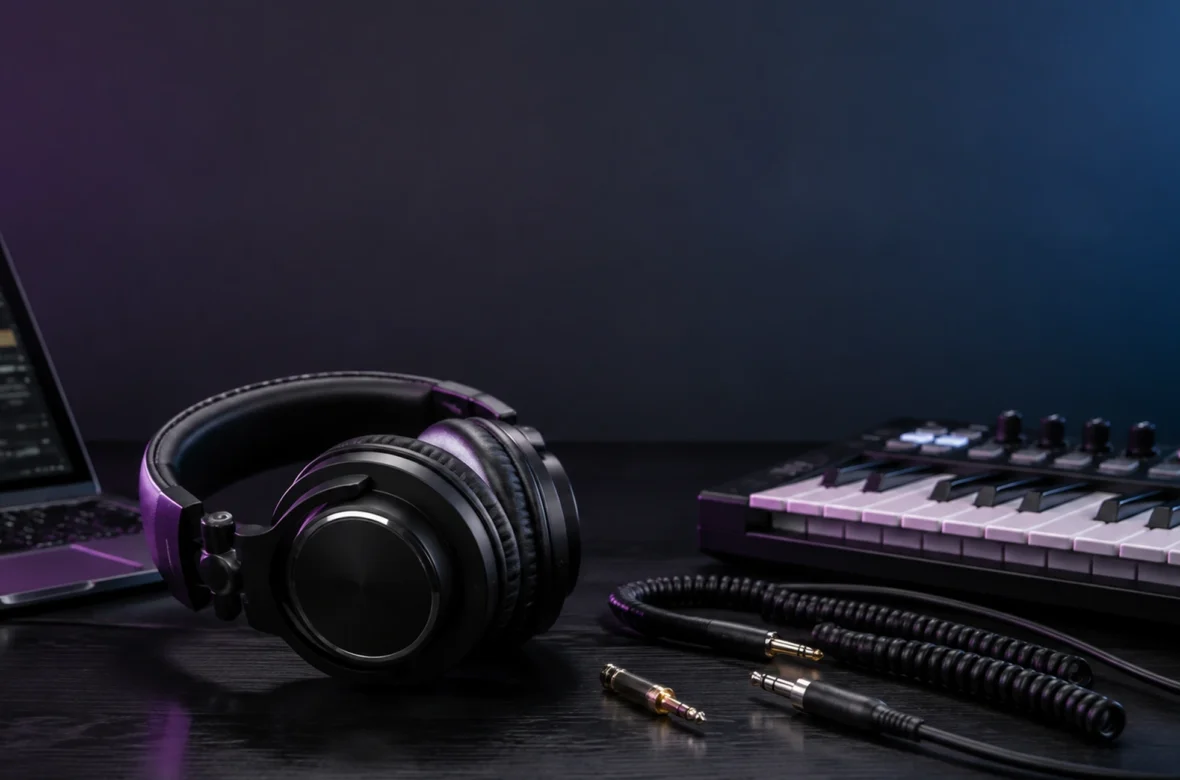
A genuinely underrated feature and a real cost saving: the M50x ships with a coiled cable (the DJ one), a 3m straight cable (the studio one), and a 1.2m straight cable (the travel one) — all detachable. Most rivals give you one and sell the others. Since the cable is the first thing to die on any headphone, detachable plus spares is exactly the right design, and it means one pair genuinely covers booth, desk and commute.
Tough, Foldable, and Serviceable
The matte plastic construction is resistant to knocks without adding weight, the hinges move smoothly and don’t develop the creaks that plague cheaper folding headphones, and the cups swivel a full 90 degrees for one-ear monitoring. They fold into the headband for transport with a pouch included. Pads are the wear item and they’re cheaply replaceable — plan on a set every year or two of heavy use and these will last a long time.
What to Watch Out For
- Isolation is good, not great. Fine for bars, home practice and most gigs — but in a genuinely loud club the HD 25 is clearly better, and the M50x leaks a little sound both ways.
- Long-session comfort tapers. Comfortable for a couple of hours; several owners report the clamp starting to press after that. The HDJ-X10 is the better four-hour headphone.
- Pads wear and go shiny. The original pads lose their smooth surface over time. Cheap to replace — just budget for it rather than being surprised.
- Narrow soundstage. Normal for a closed-back design, and irrelevant for DJing, but worth knowing if you’re mixing wide stereo productions.
- Not the most stylish. It looks like studio equipment. If your brand photography matters, the V-Moda M-100 Master is the better-looking option.
- No in-line controls or mic on any of the three cables, so it isn’t a phone-call or gaming headset out of the box.
Who the ATH-M50x Is Really For
It’s the best buy for the DJ who also produces, or plans to — one pair, both jobs, no compromise you’ll resent. It’s also excellent for bar, wedding and home DJs where extreme isolation isn’t the priority, and for anyone who wants a versatile pair for music, monitoring and travel. Skip it if you play seriously loud clubs and isolation is your top need (HD 25), if you want maximum long-session comfort (HDJ-X10), or if you’re starting out and want to spend the minimum (HDJ-CUE1). And if you’re producing seriously, headphones aren’t enough — see my studio monitors guide.
A Note From NaJade
If someone told me they had $150 and wanted one pair of headphones to cover everything — practising, prepping sets, making tracks, the flight to a gig — I’d say M50x without hesitating, and I’d be confident they’d still be using them in five years. That’s a specific and slightly unglamorous recommendation, and it’s the right one for most people reading this. What I’d push back on is buying it because it’s the most recommended headphone on the internet. Understand what you’re getting: a brilliant generalist. If your reality is four-hour sets in loud rooms, the honest answer is a specialist — and if you produce for a living, no headphone replaces hearing your bass in a room. Buy the M50x for versatility, replace the pads when they go shiny, and put the money you saved into music or a set of monitors. That’s how it earns its reputation.
Compare every option in my complete DJ headphones guide, or start from the beginner headphones guide. Want help building a setup that suits how you actually play? My DJ lessons run in person in Bangkok or online over Zoom.
Frequently Asked Questions About the ATH-M50x
Is the ATH-M50x good for DJing?
ATH-M50x vs Sennheiser HD 25: which should I buy?
Is the ATH-M50x good for music production?
What cables come with the ATH-M50x?
Is the ATH-M50x comfortable for long sets?
Is the ATH-M50x worth it over the cheaper ATH-M40x?
About the Author
NaJade is a Bangkok-based DJ playing progressive house, melodic EDM, pop, and Thai music across clubs, rooftops, and weddings in Thailand. He teaches beatmatching and mixing to beginners both in person in Bangkok and online over Zoom. When he’s not behind the decks, he’s documenting the journey on YouTube, Instagram, and TikTok.