
By NaJade · DJ in Bangkok · Published September 29, 2026
This guide is part of Denon DJ controllers & standalone systems: the complete range explained.
The player that gave the CDJ its first genuine rival — a 10.1″ screen, dual-layer playback, and streaming, for around £1,000 less than a CDJ-3000. Here’s the honest verdict.
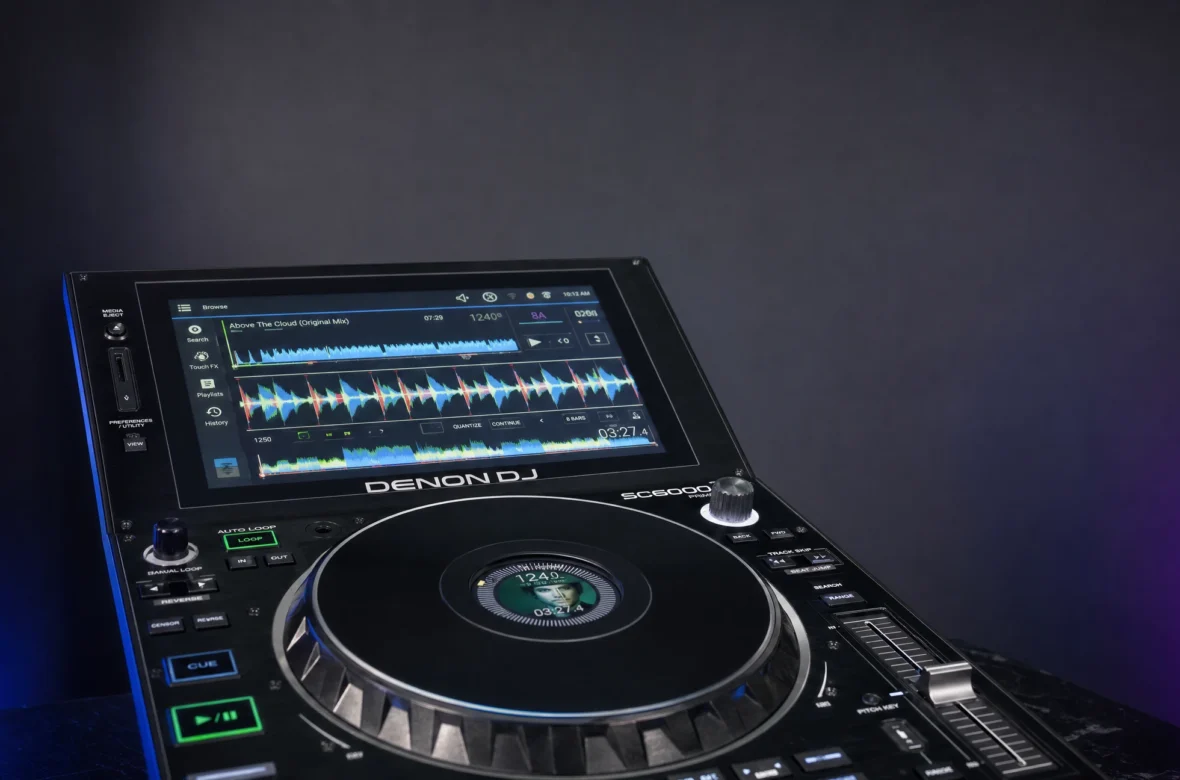
The Denon SC6000 Prime is the unit that made the rest of the industry take Denon seriously as a club player. It’s a professional standalone media player — Denon’s answer to Pioneer’s CDJ — built to be used with a separate mixer like the X1850. It has a class-leading 10.1″ touchscreen, a killer feature CDJs still don’t have (dual-layer playback), a built-in drive bay, and Wi-Fi streaming — all for dramatically less than a CDJ-3000. If you’re building a club-style separates rig and you’re open to leaving the Pioneer ecosystem, this is the deck to understand. Here’s the full picture.
The Denon SC6000 Prime is a pro standalone media player (~$1,699 / £1,499) — the main rival to Pioneer’s CDJ-3000, at roughly £1,000 less each. It offers a 10.1″ touchscreen, dual-layer playback (two tracks from one unit), an internal SATA drive bay, and Wi-Fi streaming. It’s superb value for home and event DJs building a separates rig. The honest catch: clubs run Pioneer, so this is for your own setup, not the booth you’ll be booked into.
SC6000 at a Glance
The key specs and what they mean for you:
| Spec | SC6000 Prime | What it means for you |
|---|---|---|
| Type | Pro standalone media player (needs a mixer) | The CDJ alternative; build a separates rig |
| Screen | 10.1″ multi-touch, multi-gesture | Class-leading — bigger than any CDJ |
| Jog | 8.5″ capacitive, HD centre display, adjustable tension | Large tactile surface; artwork/logo on the jog |
| Dual-layer | Yes — two independent decks + outputs per unit | Play a whole set from one player; CDJs can’t |
| Storage / streaming | Internal SATA (SSD) bay, USB, SD, Wi-Fi | Whole library inside; TIDAL/Beatport/SoundCloud |
| Software | Engine OS standalone; works with Serato DJ | Onboard analysis; imports rekordbox libraries |
| Audio / build | 24-bit/96kHz, FLAC/ALAC/WAV; all-metal · ~20.8 lb | Audiophile output; heavy and road-ready |
| Price | ~$1,699 / £1,499 each (check local) | ~£1,000 less than a CDJ-3000 |
(Prices vary by region and over time — confirm the current Thailand/local price before buying, and remember you’ll typically want two players plus a mixer.)
Why the SC6000 Matters
For years, “pro club player” meant Pioneer CDJ, full stop. The SC6000 (following its pioneering predecessor, the SC5000) changed that conversation. It matches or beats the CDJ on paper — a bigger screen, dual-layer playback, an internal drive bay, streaming — while costing dramatically less. Reviewers were blunt: it’s “a lot of deck for the money,” roughly £1,000 cheaper than a CDJ-3000 per unit, and that gap is enormous once you remember you need at least two. For a home or mobile DJ building a separates setup, that saving can go straight into your music, speakers, or a better mixer.
What’s Great About the SC6000
Dual-Layer Playback: The CDJ Killer Feature
This is the SC6000’s signature trick and the thing a CDJ still can’t do. Each player has two independent layers with their own outputs — effectively two decks in one box. Plug both outputs into your mixer and you can play a full set from a single SC6000, or run a four-deck setup from just two players. For a home rig, that can halve your deck spend. The 10.1″ screen shows a stacked waveform view so you can align both layers visually.
The Best Screen and Storage in the Class
The 10.1″ multi-touch display is genuinely class-leading — larger and more gesture-friendly than any CDJ screen, making library search, waveform work, and track prep a pleasure. Underneath sits an internal SATA bay: fit a 2.5″ SSD and your entire library lives inside the player (loading is near-instant), alongside USB, SD, and Wi-Fi streaming from Beatport, TIDAL, and more. It also loads tracks fully into memory — so if a USB drive is yanked mid-track, playback continues uninterrupted.
Familiar, Fast, and Well-Built
If you know a CDJ, you’ll be at home in minutes — the layout is deliberately familiar, with hot cues, loops, slicing across eight pads, key sync, and a smooth 8.5″ jog with adjustable tension and a bright centre display. Build is all-metal and road-ready (it’s heavy at ~20.8 lb), audio is 24-bit/96kHz playing FLAC/ALAC/WAV, and it pairs seamlessly over LAN with the X1850 mixer and LC6000 controller.
What to Watch Out For
- Not the club standard. The big one. Clubs and festivals run Pioneer CDJs, so this is a build-your-own-rig deck, not what you’ll find waiting in most booths.
- You need at least two — plus a mixer. It’s a modular player, so a real setup means two SC6000s and a mixer like the X1850 — budget accordingly (though it’s still far cheaper than the CDJ equivalent).
- It’s heavy. At ~20.8 lb per unit, a two-player rig is a lot to transport.
- Some jog-tension quirks reported. A minority of owners note inconsistent jog wheel tension — worth checking a unit if you can.
- Engine DJ still trails rekordbox slightly. The prep software has improved hugely and imports rekordbox libraries, but some still find rekordbox more polished.
- Button spacing is a little tight, and at 20.8 lb it’s not a casual carry.
How It Compares
- vs Pioneer CDJ-3000: The CDJ-3000 is the club standard and what you’ll meet in booths; the SC6000 undercuts it by ~£1,000 per unit and adds dual-layer playback, a bigger screen, an internal drive bay, and streaming. Choose the CDJ if you need the industry standard; the SC6000 for value and features on your own rig.
- vs SC6000M: The M model adds a real motorized platter for a turntable/scratch feel, at a bit more money. Same brain and screen otherwise — choose the M only if you want that vinyl feel.
- vs SC5000: The older SC5000 has a smaller 7″ screen and less refined jogs but the same dual-layer core, and it’s cheaper (great used). The SC6000 is the upgrade in screen, jog feel, and drive bay.
Who the SC6000 Is Really For
It’s ideal for the home, mobile, or event DJ building a serious club-style separates rig who wants the most features per dollar and is happy outside the Pioneer ecosystem — and especially for anyone who values dual-layer playback to save on decks. It’s also a strong pick for DJs who want a big screen and an internal library. Skip it if you specifically need to practise on the club-standard CDJ (buy or rent time on Pioneer), if portability is a priority (two heavy players), or if you want an all-in-one rather than separates — in which case the Prime 4+ makes more sense.
A Note From NaJade
The SC6000 is the deck that earned Denon real respect, and I understand why. On features and value it genuinely embarrasses the CDJ — the screen, the dual layers, the internal drive, the streaming, all for a fraction of the price. If you’re building your own rig at home or for mobile work, two of these and an X1850 give you a setup that outguns a CDJ booth for a fraction of the cost, and the dual-layer trick means you can even start with one player and still mix a full set. The honest thing I always say, though: the booth you get booked into will be Pioneer. So buy the SC6000 because you want the best own-rig value, not because you think it’ll help you in clubs — for that, you still need CDJ hours. Judge it as the brilliant home/mobile separates deck it is and it’s superb. And as always, the crowd responds to your selection and your reading of the room, never to the badge on the player.
See the whole lineup in my complete Denon DJ range guide, or weigh the other side in the Pioneer DJ controller guide. Want help learning a club-style workflow? My DJ lessons run in person in Bangkok or online over Zoom.
Frequently Asked Questions About the Denon SC6000
Is the Denon SC6000 better than the Pioneer CDJ-3000?
What is dual-layer playback on the SC6000?
Does the SC6000 need a mixer?
Can the SC6000 stream music and read rekordbox?
SC6000 vs SC6000M: what’s the difference?
Do clubs use the Denon SC6000?
About the Author
NaJade is a Bangkok-based DJ playing progressive house, melodic EDM, pop, and Thai music across clubs, rooftops, and weddings in Thailand. He teaches beatmatching and mixing to beginners both in person in Bangkok and online over Zoom. When he’s not behind the decks, he’s documenting the journey on YouTube, Instagram, and TikTok.