
By NaJade · DJ in Bangkok · Published September 28, 2026
This guide is part of Denon DJ controllers & standalone systems: the complete range explained.
Everything the SC6000 does, plus a real motorized spinning platter — a genuine turntable feel for scratch DJs and vinyl lovers. Is the upgrade worth it? Here’s the honest verdict.
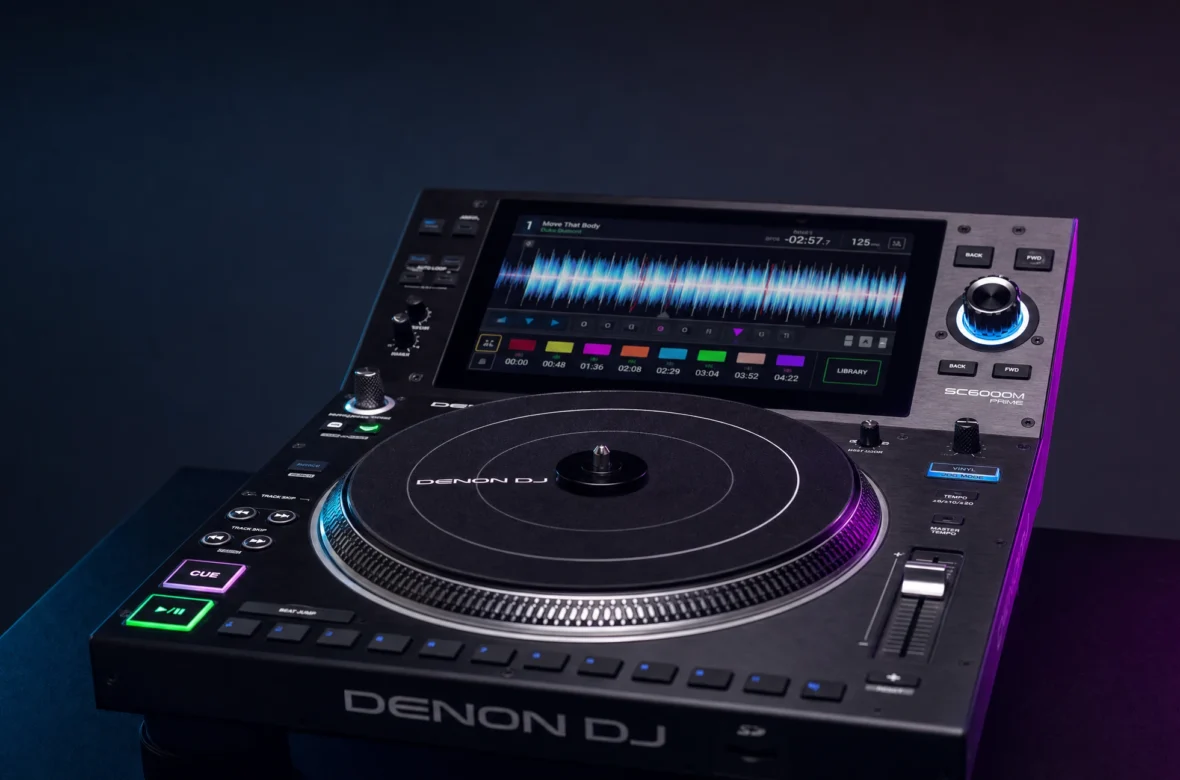
The Denon SC6000M Prime is the motorized sibling of the SC6000. Same 10.1″ screen, same dual-layer playback, same Engine OS brain — but instead of a static touch jog, it has a real motorized 8.5″ platter that spins, with quick-release control vinyl and adjustable torque. For turntablists and DJs who grew up on vinyl, that tactile spinning feel is the whole point. It’s the closest thing in the standalone world to a real deck, and a genuine rival to Pioneer’s motorized players. Here’s who should pay the premium — and who shouldn’t.
The Denon SC6000M Prime (~$1,699 / £1,499+) is the motorized version of the SC6000 pro media player — same 10.1″ screen and dual-layer playback, but with a real spinning 8.5″ motorized platter, quick-release control vinyl, and adjustable torque for a true turntable feel. It’s the pick for scratch DJs and vinyl lovers. The catch: if you don’t scratch, the standard SC6000 does everything else for less.
SC6000M at a Glance
The key specs and what they mean for you:
| Spec | SC6000M Prime | What it means for you |
|---|---|---|
| Type | Pro standalone media player, motorized (needs a mixer) | The CDJ alternative with turntable feel |
| Platter | 8.5″ die-cast aluminium, motorized, brushless DC motor | Real spinning platter for scratching |
| Control vinyl | Quick-release, adjustable torque | No tools to swap; tune the feel to your style |
| Screen | 10.1″ multi-touch, multi-gesture | Same class-leading display as the SC6000 |
| Dual-layer | Yes — two decks + outputs per unit | Full set from one player; CDJs can’t |
| Storage / streaming | Internal SATA bay, USB, SD, Wi-Fi, Bluetooth in/out | Whole library inside; wireless streaming |
| Software / audio | Engine OS; Serato DJ; 24-bit/96kHz | Standalone or software; audiophile output |
| Price | ~$1,699 / £1,499+ each (check local) | ~$200 more than the static SC6000 |
(Prices vary by region and over time — confirm the current Thailand/local price before buying, and budget for two players plus a mixer.)
The Whole Point: A Real Spinning Platter
Everything else about the SC6000M matches the standard SC6000 — so the entire decision comes down to the platter. Where the SC6000 has a static, touch-sensitive jog (excellent, but it doesn’t spin), the SC6000M has a genuine motorized 8.5″ die-cast aluminium platter driven by a brushless DC motor, with control vinyl on top. It spins like a turntable, responds like a turntable, and lets you scratch, spin-back, and beat-juggle with real vinyl feel. The torque is adjustable (light to heavy) just like high-end turntables, and the quick-release vinyl means no tools to swap or tighten. For turntablists, this transforms the deck.
What’s Great About the SC6000M
Turntable Feel Meets Modern Power
This is the magic: you get the tactile, physical feel of vinyl and all the modern power of the Prime ecosystem. Scratch and juggle on a real motor, then still enjoy the 10.1″ touchscreen, dual-layer playback, onboard analysis, streaming, and an internal drive bay. Reviewers note the motor gives real precision for scratching and beat juggling that a static jog simply can’t replicate. For DJs coming from turntables, it’s the standalone deck that finally feels right.
Everything the SC6000 Offers, Too
Because it shares the SC6000’s core, you also get the dual-layer trick (two decks from one unit — a whole set from a single player), the class-leading 10.1″ screen with stacked waveforms, an internal SATA bay for your library, Wi-Fi streaming, Bluetooth in/out, 24-bit/96kHz audio, and full LAN pairing with the X1850 mixer. It reads rekordbox libraries and runs Serato DJ too. All the value of the SC6000 story applies here — you’re just adding the motor.
A True Rival to Pioneer’s Motorized Players
Motorized standalone players are a small club, and the SC6000M is one of the strongest — offering the vinyl feel scratch DJs want with dual-layer flexibility and a big screen, at a price that still undercuts high-end Pioneer alternatives. Combined with a mixer like the X1850, it makes a formidable turntablist-friendly separates rig.
What to Watch Out For
- Only worth it if you scratch. The single most important point. If you don’t scratch or beat-juggle, you’re paying extra for a motor you won’t use — the static SC6000 does everything else identically for less.
- Some prefer the static jog for micro-adjustments. Interestingly, a few DJs find the non-motorized SC6000 better for fine, granular nudge adjustments when beatmatching by ear.
- Not the club standard. Like all Denon, clubs run Pioneer — this is an own-rig deck.
- Heavy, and you need two plus a mixer. A motorized two-player rig is substantial to transport and budget for.
- Jog-tension consistency reported occasionally, as with the SC6000 line — worth checking a unit.
- The control vinyl is smaller than a real 12″, though in practice it doesn’t hurt scratching or juggling much.
How It Compares
- vs SC6000 (static): Identical apart from the platter. Pay the ~$200 premium only if you scratch or want vinyl feel; otherwise save it.
- vs Pioneer CDJ-3000: The CDJ-3000 has a static jog and is the club standard; the SC6000M adds a motorized platter and dual-layer playback for less. For turntablists building their own rig, the SC6000M is a compelling, cheaper, more tactile choice.
- vs a Serato scratch controller (e.g. Rane One): Dedicated scratch controllers can feel more turntable-like still, but they’re software-tethered; the SC6000M gives motorized feel plus full standalone play and a big screen.
Who the SC6000M Is Really For
It’s made for the scratch DJ, turntablist, or vinyl-raised DJ who wants a spinning platter with modern standalone power, and who’s building their own separates rig. It’s also great for anyone who simply loves the feel of a moving platter and will genuinely use it. Skip it if you don’t scratch — the static SC6000 saves you money for the same everything-else — if you need club-standard Pioneer gear, or if you want an all-in-one (the Prime 4+).
A Note From NaJade
I love that this deck exists, because the feel of a spinning platter is something a lot of us genuinely miss in the digital age. If you scratch, juggle, or just came up on turntables, the SC6000M is a joy — the motor is precise, the vinyl feel is real, and you lose nothing of the SC6000’s modern power to get it. But here’s the honest bit, and it’s simple: if you don’t scratch, don’t buy this. The static SC6000 has the same screen, the same dual layers, the same everything else, for less money — and some DJs even prefer its jog for fine nudges when beatmatching by ear. So be honest about how you actually play. If that platter will spin under your palm every set, it’s worth every extra baht. If it’ll just look cool sitting still, save the money and put it toward music or a better mixer. The motor doesn’t make you a better DJ — your hands and your selection do.
See the whole lineup in my complete Denon DJ range guide, or weigh the other side in the Pioneer DJ controller guide. Want to sharpen your scratching or club workflow? My DJ lessons run in person in Bangkok or online over Zoom.
Frequently Asked Questions About the Denon SC6000M
What’s the difference between the SC6000 and SC6000M?
Is the SC6000M good for scratching?
Is the SC6000M worth the extra money over the SC6000?
Does the SC6000M need a mixer?
Does the SC6000M have dual-layer playback?
Does the SC6000M work with Serato and rekordbox?
About the Author
NaJade is a Bangkok-based DJ playing progressive house, melodic EDM, pop, and Thai music across clubs, rooftops, and weddings in Thailand. He teaches beatmatching and mixing to beginners both in person in Bangkok and online over Zoom. When he’s not behind the decks, he’s documenting the journey on YouTube, Instagram, and TikTok.