
By NaJade · DJ in Bangkok · Published July 14, 2026
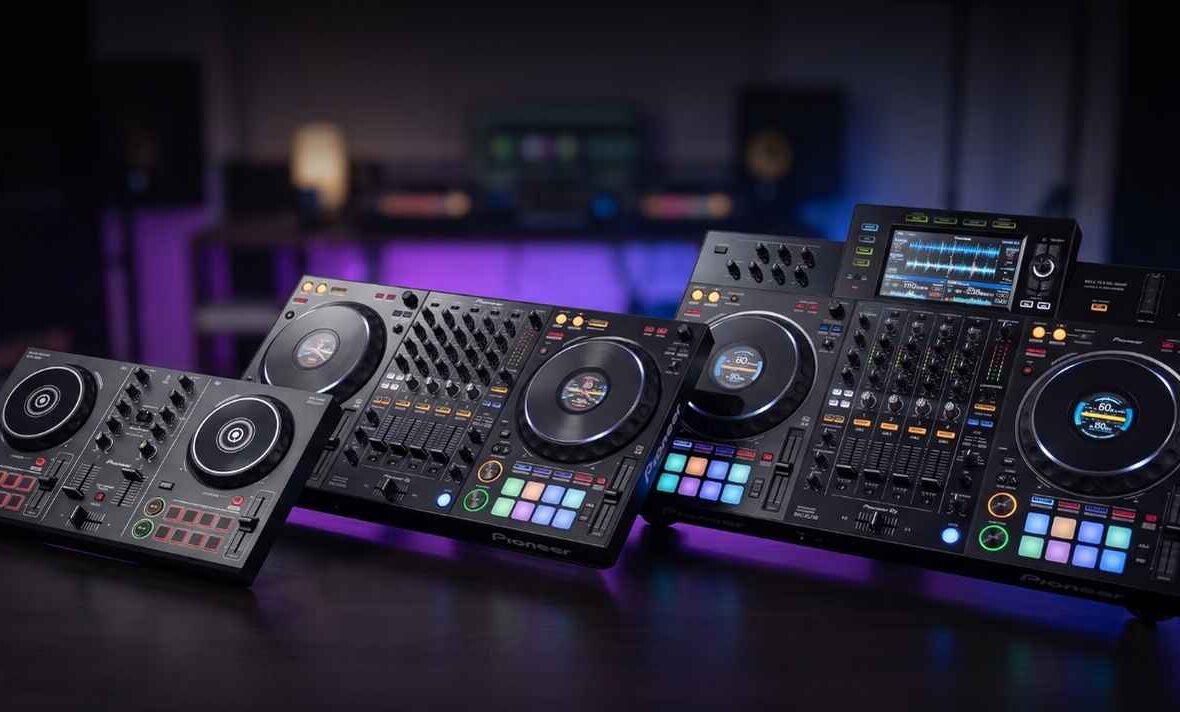
Pioneer DJ (now AlphaTheta) makes a controller for every level — but the lineup is confusing. Here’s the whole range explained, so you can find the right one fast.
FLX4, REV5, GRV6, FLX10, XDJ-XZ, OPUS-QUAD… Pioneer DJ’s naming can feel like alphabet soup. But there’s actually a clear logic to the range, and once you see it laid out by tier and purpose, choosing becomes easy. This guide maps the entire current Pioneer DJ / AlphaTheta controller lineup — from the beginner favourites to the club flagships and standalone systems — with an honest take on who each one is really for. I play on an XDJ-RX3 myself, so I’ll point you to the genuine sweet spots and the traps along the way.
Pioneer DJ’s controller range runs from beginner units like the DDJ-FLX4 and FLX2, through mid-tier models like the FLX6, REV5, GRV6 and DDJ-1000, up to flagships like the FLX10 and REV7 — plus standalone systems like the XDJ-XZ, OPUS-QUAD and the CDJ-3000 players. The best one depends on your budget, whether you want scratch or club workflow, and if you need to play without a laptop.
First: Pioneer DJ Is Now AlphaTheta
A quick note that clears up confusion: the brand long known as Pioneer DJ now operates under its parent company name, AlphaTheta. You’ll see newer controllers (like the DDJ-GRV6 and FLX2) badged AlphaTheta, while the product line, the “DDJ/XDJ/CDJ” naming, and the rekordbox software all continue as before. For this guide I’ll say “Pioneer DJ” throughout, since that’s what most people still search — just know the two names refer to the same lineup.
How the Range Is Organised
Pioneer’s controllers split along three simple questions, and answering them narrows your choice immediately:
- What’s your budget and level? Beginner, mid-range, or flagship.
- Club workflow or scratch workflow? The standard “DDJ/XDJ” layout mirrors club gear; the “REV” series is battle/scratch-style.
- Do you need to play without a laptop? Controllers need a computer (or phone); standalone “XDJ” units and CDJ players don’t.
If you’re brand new and still unsure about any of this, start with my best DJ controller for beginners guide and the CDJ vs controller explainer, then come back here to pick a specific model.
The Full Pioneer DJ Controller Range at a Glance
Here’s the entire current lineup in one table — tier, channels, workflow, whether it runs standalone, and who each is really for. Tap any model below the table for its full guide.
| Model | Tier | Channels | Workflow | Standalone? | Best for |
|---|---|---|---|---|---|
| DDJ-200 | Budget | 2 | Club-style | No (phone) | Casual, smartphone mixing |
| DDJ-FLX2 | Budget | 2 | Club-style | No | Cheapest serious entry |
| DDJ-FLX4 | Beginner | 2 | Club-style | No | Best all-round beginner |
| DDJ-REV1 | Beginner | 2 | Scratch/battle | No | Beginner scratch DJs |
| DDJ-FLX6 | Mid | 4 | Club-style | No | 4-channel on a budget |
| DDJ-REV5 | Mid | 2 | Scratch/battle | No | Gigging open-format/scratch |
| DDJ-GRV6 | Mid | 4 | Club-style | No | Remixing with Groove Circuit |
| DDJ-1000 | Mid | 4 | Club-style | No | Club practice at home |
| DDJ-FLX10 | Flagship | 4 | Club-style | No | Pro laptop DJs, Stems |
| DDJ-REV7 | Flagship | 2 | Scratch/battle | No | Serious scratch DJs |
| XDJ-RX3 | Standalone | 2 | Club-style | Yes | Laptop-free 2-channel |
| XDJ-XZ | Standalone | 4 | Club-style | Yes | Laptop-free 4-channel |
| OPUS-QUAD | Standalone | 4 | Club-style | Yes | Premium standalone with screens |
| CDJ-3000 | Pro player | per-unit | Club-style | Yes | Club-standard setups |
Beginner Controllers
The entry tier is where most DJs start, and Pioneer’s beginner units are genuinely excellent value in 2026.
DDJ-FLX4 — the default first controller
The one I recommend to most beginners: a club-standard 2-channel layout, dual rekordbox/Serato support, Bluetooth phone mixing, and smart helper features. Read the full DDJ-FLX4 review.
DDJ-FLX2 — the cheapest serious start
AlphaTheta’s most affordable real controller, ideal if you specifically want into the Pioneer ecosystem on a tight budget. Full DDJ-FLX2 guide.
DDJ-REV1 — beginner scratch
A battle-style entry controller for aspiring scratch/open-format DJs on Serato. Full DDJ-REV1 guide.
DDJ-200 — smartphone starter
The lightest, most portable option, built for phone/tablet mixing — but note it has no built-in audio interface. Full DDJ-200 guide.
Mid-Range Controllers
Step up for four channels, bigger jog wheels, better build, and more performance features — the sweet spot for gigging and serious home setups.
DDJ-FLX6 — four channels affordably
A 4-channel club-style controller that bridges beginner and pro. Full DDJ-FLX6 guide.
DDJ-REV5 — mid-tier scratch
Fills the gap between the REV1 and REV7 — large jogs, Magvel crossfader, onboard Stems, gigging-ready. Full DDJ-REV5 guide.
DDJ-GRV6 — remix-focused
A 4-channel unit with CDJ-3000-size jogs and the rekordbox “Groove Circuit” for on-the-fly remixing. Full DDJ-GRV6 guide.
DDJ-1000 — club layout at home
The long-time gold-standard rekordbox controller, with jogs and a mixer modelled on Pioneer’s club gear. Full DDJ-1000 guide.
Flagship Controllers
Top-of-the-line laptop controllers with the most features, best build, and pro connectivity.
DDJ-FLX10 — the 4-channel flagship
Pioneer’s flagship laptop controller: four channels, real-time Stem separation, on-jog screens, and external inputs to anchor a whole setup. Full DDJ-FLX10 guide.
DDJ-REV7 — flagship scratch
Motorized 7″ platters, on-jog screens, and a DJM-S11-style scratch mixer — the turntablist’s flagship. Full DDJ-REV7 guide.
Standalone Systems and Players
These need no laptop — they play straight from USB, SD, or streaming. This is where I live with my XDJ-RX3, and where you head if you want to mirror a club booth.
XDJ-RX3 — 2-channel standalone
My own machine: a bright central screen, club-style layout, and full standalone freedom in two channels. Read my hands-on XDJ-RX3 review.
XDJ-XZ — 4-channel standalone
The flagship all-in-one: near club-level four-channel layout, big screen, great jogs, no laptop required. Full XDJ-XZ guide.
OPUS-QUAD — premium standalone
A striking 4-channel standalone with multiple high-quality screens and pro I/O — style and function combined. Full OPUS-QUAD guide.
CDJ-3000 — the club standard
Not a controller but the industry-standard media player you’ll meet in real club booths, used in pairs with a DJM mixer. Full CDJ-3000 guide.
Which Pioneer Controller Should You Buy?
A quick decision shortcut:
- Total beginner, club-style: DDJ-FLX4 (or FLX2 to save money).
- Beginner who wants to scratch: DDJ-REV1.
- Gigging, want 4 channels: DDJ-FLX6, or step up to the FLX10.
- Serious scratch/open-format: DDJ-REV5, then REV7.
- Want to play without a laptop: XDJ-RX3 (2-ch) or XDJ-XZ (4-ch); OPUS-QUAD for premium.
- Preparing for club booths: learn on anything rekordbox, aim for CDJ-3000 familiarity.
Whichever you choose, your software choice matters too — see rekordbox vs Serato. And remember a controller is only part of your setup: you’ll also want good headphones and a way to hear your mix.
A Note From NaJade
Here’s my honest take after years in the Pioneer ecosystem: don’t overbuy. The single most common mistake I see is beginners stretching for a flagship FLX10 or a standalone when an FLX4 would have taught them everything and left money for music, headphones, and lessons. Gear doesn’t make you good — reps do. Buy the controller that matches where you are now plus one small step, learn it inside out, and upgrade when the gear is genuinely the thing holding you back. I gig on an XDJ-RX3 not because it’s the most expensive option, but because standalone suits how I play. Match the tool to your path, not to the spec sheet. Use the guides above to find your fit, and if you want a human to help you choose and learn it, that’s exactly what my lessons are for.
This guide is part of my wider DJ gear for beginners series. Want help choosing your first controller and actually learning to mix on it? My DJ lessons run in person in Bangkok or online over Zoom.
Frequently Asked Questions About Pioneer DJ Controllers
What’s the best Pioneer DJ controller for beginners?
Is Pioneer DJ the same as AlphaTheta?
What’s the difference between the DDJ and REV controller series?
What’s the difference between a Pioneer controller and a standalone XDJ?
Do Pioneer DJ controllers work with rekordbox and Serato?
Which Pioneer controller should I buy to eventually play in clubs?
About the Author
NaJade is a Bangkok-based DJ playing progressive house, melodic EDM, pop, and Thai music across clubs, rooftops, and weddings in Thailand. He teaches beatmatching and mixing to beginners both in person in Bangkok and online over Zoom. When he’s not behind the decks, he’s documenting the journey on YouTube, Instagram, and TikTok.