
By NaJade · DJ in Bangkok · Published July 14, 2026
This guide is part of Pioneer DJ controllers: the complete range explained.
The FLX6’s replacement fixes almost everything people griped about — better build, a club-standard layout, and remix tools that are actually useful. But it has a few real catches. Here’s the honest verdict.
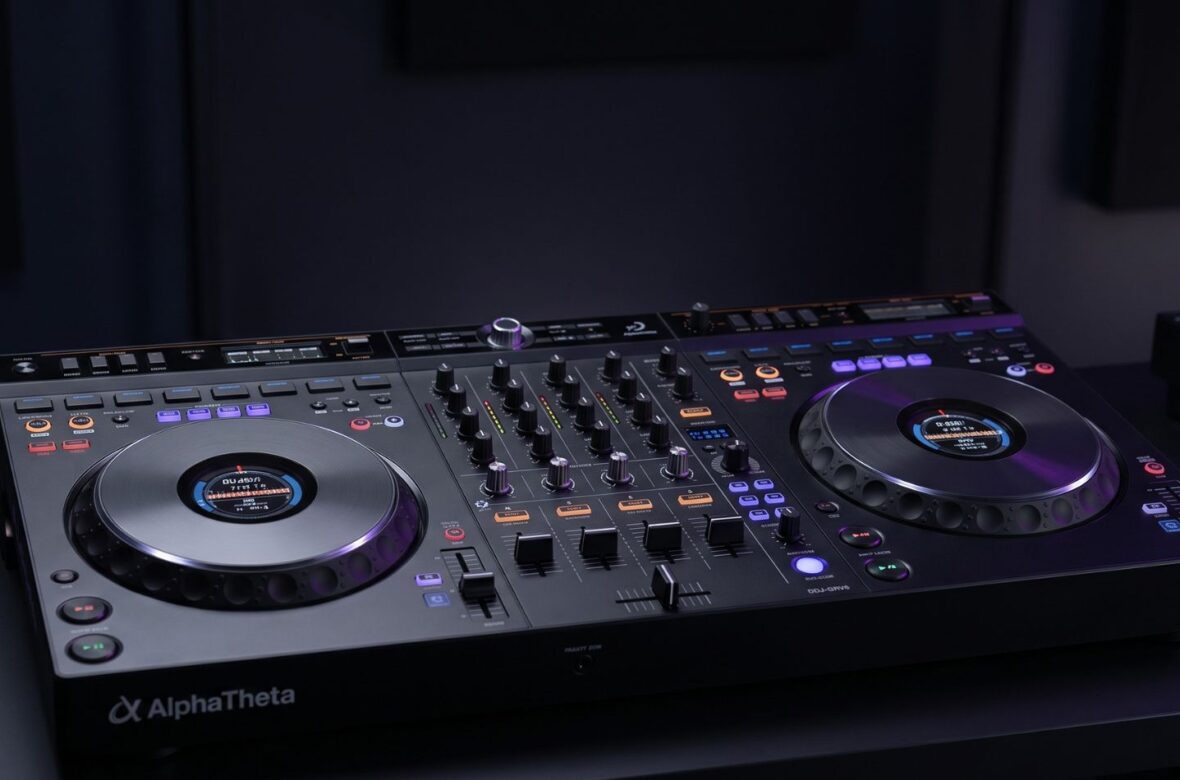
The DDJ-GRV6 (“groove six”) is AlphaTheta’s mid-range 4-channel controller, and it effectively replaces the older DDJ-FLX6. That matters, because it addresses the FLX6’s two biggest weaknesses: a cheap-feeling build and gimmicky headline effects. In their place you get a noticeably sturdier unit, a layout modelled directly on the club-standard CDJ-3000 and DJM-A9, and two genuinely creative remix tools — Groove Circuit and Stems FX. For a hobby or intermediate DJ who wants a serious layout without flagship pricing, it’s one of the strongest picks in the range. But there are a few things to know before you buy.
The DDJ-GRV6 is a mid-range 4-channel controller that replaces the FLX6, with a sturdier build, a CDJ-3000-inspired club-standard layout (pads above the jogs), and dual rekordbox/Serato support. Its standout tools — Groove Circuit for live drum-swap remixing and Stems FX — are genuinely useful, not gimmicks. The catches: consumer-grade plastic, no external inputs beyond a mic, short pitch faders, and it needs a separate power supply.
DDJ-GRV6 at a Glance
The key specs and what they mean for you:
| Spec | DDJ-GRV6 | What it means for you |
|---|---|---|
| Channels | 4 | Layer tracks, loops, acapellas; live mashups |
| Layout | Club-standard (CDJ-3000 + DJM-A9 inspired) | Pads above jogs — closest home prep for club booths |
| Software | rekordbox + Serato DJ Pro (free), +VirtualDJ/djay | Broad flexibility; deep rekordbox 7 integration |
| Jog wheels | Full-size (CDJ-3000-style) | Good for scratching and precise control |
| Signature feature | Groove Circuit (rekordbox) / Stems FX (Serato) | Live drum-swap remixing; genuinely useful |
| Browsing | Smart Rotary Selector + Discover | Fast library navigation and track suggestions |
| Connectivity | RCA master + booth, mic, dual headphone, USB-C | No external/aux inputs beyond the mic |
| Power | Requires external PSU (not phone-charger bus power) | Not powered off a phone; needs the supply |
| Price | ~$829–$899 (check current local price) | Mid-range; a step up in cost from the FLX6 |
(Prices vary by region and over time — confirm the current Thailand/local price before buying.)
The Headline Feature: Groove Circuit
Groove Circuit is the GRV6’s signature trick and the reason to consider it over a plain 4-channel controller. At the press of a button you can swap the drum part of any playing track for a beat or break from a different genre, then apply Roll, Trans, and Release FX to build fills, breakdowns, and build-ups — live, on the fly. It’s a rekordbox feature (it ships with a free 40-loop pack); in Serato the equivalent is Stems FX, which lets you apply effects to individual stems of your choice. Crucially, reviewers agree these are actually useful creative tools rather than the gimmicky Merge FX and Jog Cutter of the old FLX6. The honest caveat: many DJs play with them a few times and then rarely use them in real sets — so only pay for the GRV6 over cheaper options if you’ll genuinely use these.
What’s Good About the GRV6
A Real Club-Standard Layout
This is arguably the GRV6’s best quality. The 8 performance pads sit above the jog wheels exactly like the flagship CDJ-3000, and the Beat FX section is modelled on the DJM-A9 club mixer. Several reviewers note it’s actually the closest stepping-stone to club gear in AlphaTheta’s whole controller range — even more so than the pricier FLX10. If your goal is to practise at home on something that feels like a real booth, this layout is a genuine advantage.
A Genuine Build Upgrade Over the FLX6
The FLX6 famously felt entry-level despite its mid-tier price. The GRV6 is a clear step up — sturdier, with pads and faders that feel like they can take years of use. It’s still consumer-grade plastic beneath the professional styling, but it no longer feels cheap in the way its predecessor did.
Smart Browsing and Broad Software Support
The Smart Rotary Selector (tilt up/down and left/right to fly through big libraries) plus the Discover track-suggestion button make finding tracks fast, and it has deep rekordbox 7 integration with a handy hardware track-preview. It runs rekordbox, Serato DJ Pro, VirtualDJ, and djay, on desktop or mobile. For choosing between the big two, see rekordbox vs Serato.
What to Watch Out For
- Consumer-grade plastic. Better than the FLX6, but still built to AlphaTheta’s lower-end standards beneath the pro looks.
- No external inputs except a mic. You can’t plug in turntables, media players, or aux sources — it won’t anchor a hybrid setup.
- Short pitch faders. Like the entry units, which makes precise manual tempo control harder.
- Needs an external power supply. It isn’t bus-powered from a phone/tablet charger; some users also report relatively low output volume, so check your gain staging.
- Serato lacks Pitch ‘n Time. The bundled Serato DJ Pro doesn’t include the key-shift expansion, which Serato won’t sell separately cheaply — a real cost if you need it.
- Standout features can go unused. Groove Circuit/Stems FX are fun but niche; if you only mix and blend, a cheaper controller gets you there.
How It Compares in the Range
- vs DDJ-FLX6: The GRV6 is the direct replacement and a meaningful upgrade — better build, better layout, and genuinely useful remix tools versus the FLX6’s gimmicky ones. It costs a bit more, but if budget allows it’s the better long-term buy.
- vs DDJ-FLX4: The FLX4 is the cheaper 2-channel beginner pick. Step up to the GRV6 only when you genuinely want four channels and the club layout.
- vs DDJ-FLX10: The FLX10 is the more advanced flagship 4-channel controller with deeper features and better build — at a higher price. The GRV6 is the value pick; the FLX10 the do-it-all one.
Who the GRV6 Is Really For
It’s the right controller for the hobby or intermediate DJ who wants a club-style 4-channel layout, real live-remix tools, and broad software support without paying flagship money — and especially anyone working toward club-standard CDJ gear who wants to practise on a matching layout at home. Skip it if you need external inputs for vinyl or hardware, want a scratch-first battle layout (look at the DDJ-REV5 or REV7), or want AlphaTheta’s most advanced controller (the FLX10). And if you only mix and blend without using remix features, the cheaper FLX4 will serve you just as well.
A Note From NaJade
What I like most about the GRV6 isn’t the flashy Groove Circuit — it’s that layout. As someone who plays on club-standard gear, I think the smartest thing a home DJ can do is practise on something laid out like a real booth, and the GRV6 nails that better than almost anything at its price. That’s the reason to buy it. Be honest with yourself about the remix features, though: they’re fun in a shop demo, but plenty of DJs never touch them again once the novelty fades, and the drum sounds can stick out over your track if you overdo them. So don’t pay the premium for Groove Circuit unless you know you’ll build it into your style — buy it for the club-ready layout and the solid four-channel workflow, and treat the remix tools as a bonus. And do factor in the power-supply and the Serato Pitch ‘n Time quirks before you commit. Get the fundamentals right and this is a controller you can genuinely grow toward the booth on.
Compare it with the rest of the lineup in my complete Pioneer DJ controller guide, or the wider DJ gear for beginners series. Want help choosing and learning to mix? My DJ lessons run in person in Bangkok or online over Zoom.
Frequently Asked Questions About the DDJ-GRV6
Is the DDJ-GRV6 worth it?
What is Groove Circuit on the DDJ-GRV6?
Is the DDJ-GRV6 better than the DDJ-FLX6?
Does the DDJ-GRV6 work with rekordbox and Serato?
Does the DDJ-GRV6 need a laptop?
Is the DDJ-GRV6 good for beginners?
About the Author
NaJade is a Bangkok-based DJ playing progressive house, melodic EDM, pop, and Thai music across clubs, rooftops, and weddings in Thailand. He teaches beatmatching and mixing to beginners both in person in Bangkok and online over Zoom. When he’s not behind the decks, he’s documenting the journey on YouTube, Instagram, and TikTok.