
By NaJade · DJ in Bangkok · Published November 11, 2026
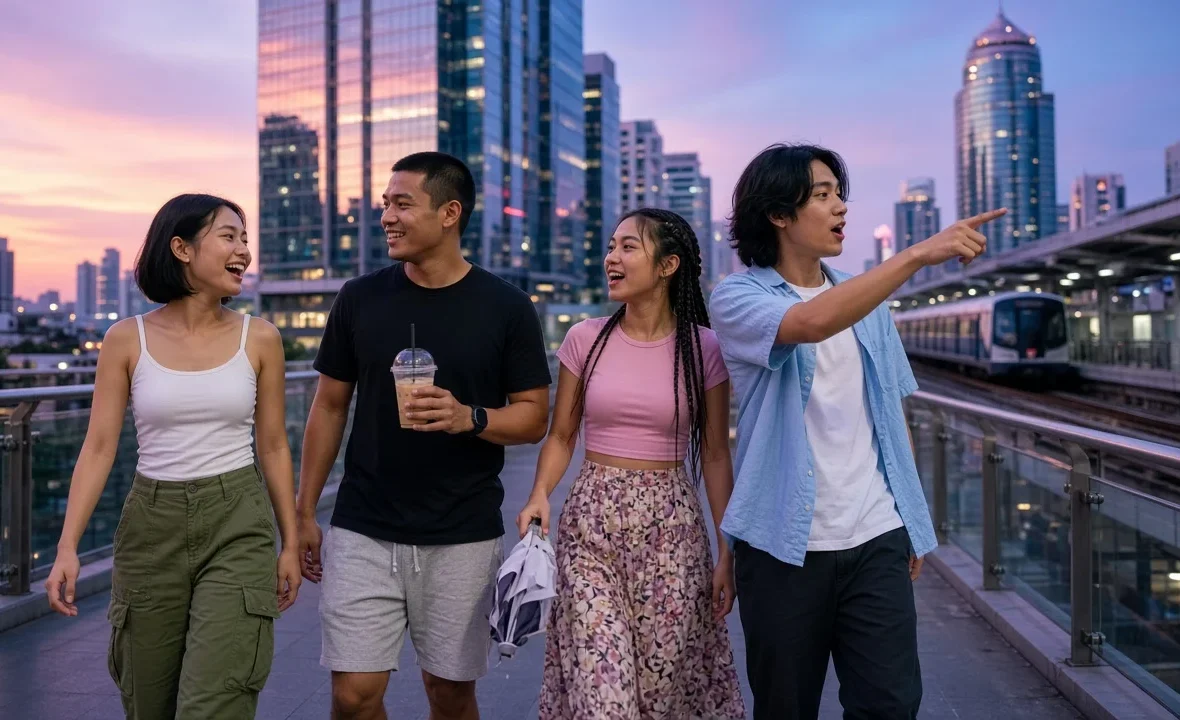
Bangkok is walkable in pockets rather than as a whole city. Areas like the old town, Chinatown, Ari and the Siam skywalks are good on foot, but uneven pavements, street stalls, heat and fast traffic make long walks between districts hard. Most people walk short distances and use the BTS, MRT, boats or Grab to link them.
Visitors often arrive planning to walk everywhere, then give up by day two. Locals mostly walk to the train, the market or the next soi, and ride the rest. I walk a lot, especially around my neighbourhood and when I am scouting venues, so here is an honest guide to what walking in Bangkok is really like.
Walk within neighbourhoods, ride between them. Bangkok’s best walking is in the old town, Chinatown, Ari, Lumpini and the Siam skywalks. Go early morning or after sunset, carry water, watch for motorbikes on pavements, and use footbridges or signal crossings — many drivers still don’t stop at zebra crossings.
The Honest Answer
A survey by Chulalongkorn University’s Urban Design and Development Center, reported in the Bangkok Post, found that residents walk roughly 800 metres a day on average, and that using the BTS or MRT adds about 500 metres more. That says a lot: Bangkok people do walk, but mostly as the link between transport, not as the whole journey.
The city was built around canals and later around roads, not pavements. Blocks are huge, small sois are often dead ends, and footpaths come and go. But in the right areas, walking is the best way to see the city.
What Makes Walking Hard
| Challenge | What it looks like | What helps |
|---|---|---|
| Heat | 32–35°C most afternoons, high humidity | Walk before 10am or after 5pm |
| Pavements | Uneven slabs, steps, poles, parked bikes | Comfortable shoes; watch your feet |
| Street stalls | Footpaths taken up by food carts | Step around slowly; enjoy the snacks |
| Motorbikes | Riders using pavements to skip traffic | Keep to one side; don’t step out suddenly |
| Big roads | Six or more lanes, few crossings | Use footbridges, skywalks or signal crossings |
| Rain | Sudden downpours and flooded sois | Carry a small umbrella from May to October |
For more on the weather, see the Bangkok hot season guide.
Crossing the Road Safely
Traffic drives on the left, so look right first. Zebra crossings exist, but don’t assume cars will stop. After a fatal crash at a Bangkok crossing in 2022, the fine for failing to stop rose to 4,000 baht, yet a survey cited by The Thaiger found almost 90% of vehicles in Bangkok still don’t stop.
- Use footbridges and BTS skywalks whenever they are there.
- At signal crossings, wait for the green figure, then still check for turning bikes.
- Cross with locals when you can; move at a steady pace and don’t run.
- Never assume a motorbike will stop for you, even on a pavement.
The Best Areas for Walking
- Rattanakosin (the old town). Temples, palaces and the river within a short walk of each other; pair it with Wat Arun by ferry.
- Chinatown. Dense, busy and best after dark when the food comes out. See Chinatown Bangkok.
- Ari. Leafy sois, cafés and a relaxed pace. The Ari guide has routes.
- Siam to Chit Lom. Elevated skywalks link the malls and BTS stations, so you can walk in the shade above the traffic. More in Siam Bangkok.
- Lumpini and Benjakitti parks. Proper paths, trees and the Benjakitti skywalk — see Lumpini Park and Benjakitti Park.
When Not to Walk
Skip walking between distant districts, along major highways, or with heavy bags. Use the BTS Skytrain, the MRT, a river boat, or a motorbike taxi for the last kilometre down a long soi. Combining short walks with transport is how locals get around — how to get around Bangkok explains every option.
A Note From NaJade
Some of my favourite Bangkok moments have been on foot: walking through Chinatown at night after a gig, or the slow loop around Lumpini at sunrise when the city is still quiet. But I have also learned not to fight the city. I don’t walk two kilometres along a main road at 2pm in April. I take the BTS, then walk the last bit through the soi, stopping for a drink from a street stall. That rhythm, a short ride then a slow walk, is the real way to enjoy Bangkok on foot.
More: how to get around Bangkok, things to do in Bangkok, is Bangkok safe and what to wear in Bangkok.
Frequently Asked Questions
Is Bangkok a walkable city?
Is it safe to walk in Bangkok at night?
Do cars stop at zebra crossings in Bangkok?
What is the best time of day to walk in Bangkok?
What is the most walkable area in Bangkok?
What shoes should I wear for walking in Bangkok?
About the Author
NaJade is a Bangkok-based DJ playing progressive house, melodic EDM, pop, and Thai music across clubs, rooftops, and weddings in Thailand — and has lived in the city long enough to have made every one of these mistakes at least once. Find him on YouTube, Instagram, and TikTok.
🎧 Listen to his latest set · 💌 Book him for your venue or event