
By NaJade · DJ in Bangkok · Published October 20, 2026
Bangkok’s Chinatown is centred on Yaowarat Road, a short walk from Wat Mangkon MRT station on the Blue Line. Go in the evening, from about 6pm, when the street food stalls are in full swing, and avoid Mondays, when many vendors close. By day, visit the temples, gold shops and Sampeng Lane market. Bring cash — most stalls don’t take cards.
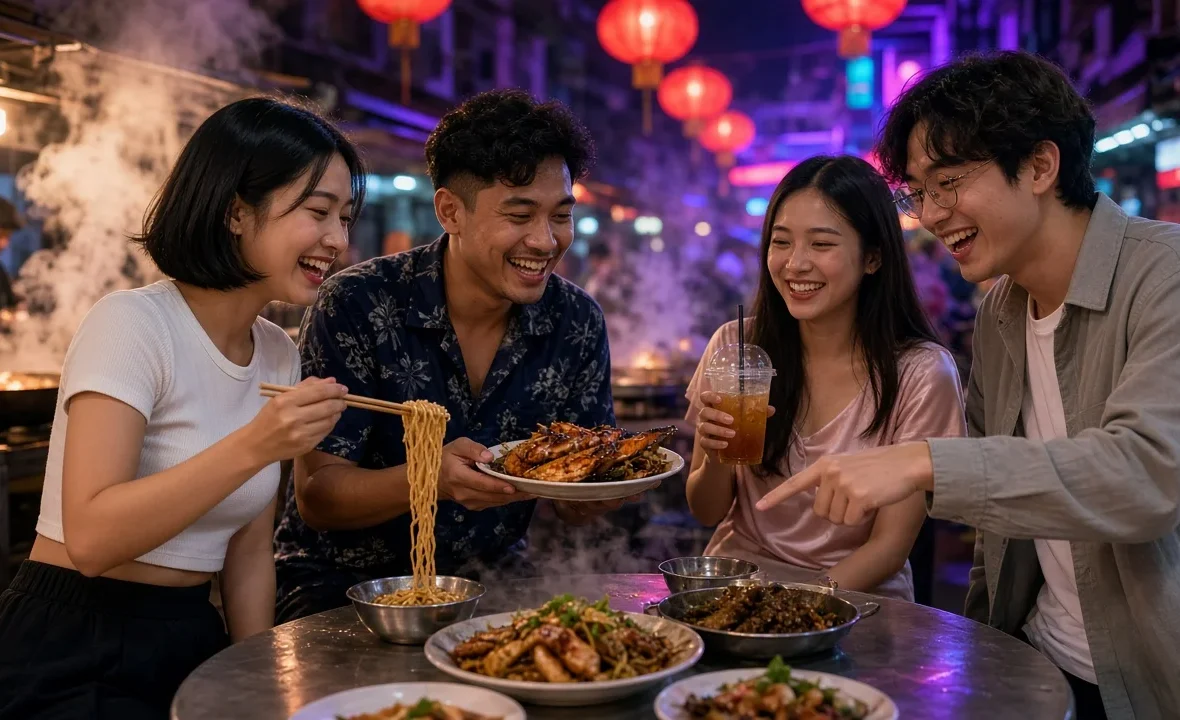
Yaowarat is one of my favourite places to take friends visiting Bangkok — and one of my favourite places to eat after a late set. It’s loud, crowded, neon-lit and smells of charcoal and spice. It’s also easy to do badly: show up on a Monday afternoon and you’ll wonder what the fuss is about. Here’s how to get it right.
Take the MRT Blue Line to Wat Mangkon, walk two minutes to Yaowarat Road, and arrive around 6pm, Tuesday to Sunday. Eat from several stalls rather than one restaurant, budget roughly 50–150 baht per dish, and carry cash. Visit Wat Traimit and Wat Mangkon Kamalawat by day, dressed respectfully.
How to Get to Chinatown
| Option | How | Good for |
|---|---|---|
| MRT Blue Line | Get off at Wat Mangkon station; Yaowarat Road is about two minutes on foot | The easiest option from most hotel areas |
| River boat | Chao Phraya Express Boat to Ratchawong pier (N5), then a 10-minute walk | Combining with riverside sights |
| Taxi or Grab | Ask for “Yaowarat” | Late at night; avoid evening rush hour |
Traffic around Yaowarat is notoriously slow in the evening, so the MRT is usually fastest. The river route is more scenic — see our guide to the Chao Phraya Express Boat, and how to get around Bangkok for the bigger picture.
When to Go
- Evening (6pm–10pm): the main event. Stalls set up from around 5pm, the street is buzzing by 6–7pm, and it’s very crowded from 8pm on weekends.
- Daytime: better for temples, Sampeng Lane’s wholesale market, herbal shops and the famous gold shops — and less heat on the narrow side streets.
- Mondays: many street food vendors take the day off, traditionally linked to the city’s street-cleaning day. Restaurants stay open, but the street is much quieter.
- Festivals: Chinese New Year turns Yaowarat into Bangkok’s biggest street party, and the autumn Vegetarian Festival fills it with yellow flags and meat-free food. Both are spectacular and extremely crowded.
What to Eat on Yaowarat
Rather than chasing one famous shop, the best approach is to graze: share small plates at several stalls. Classic Chinatown dishes include:
| Dish | What it is | Typical price |
|---|---|---|
| Rolled rice noodle soup | Peppery pork broth with curled rice noodles | 50–100 baht |
| Oyster or mussel omelette | Crispy, eggy, cooked on a hot griddle | 100–200 baht |
| Grilled seafood | Prawns, squid and shellfish by weight | 200–500+ baht |
| Roast duck and pork | Over rice or noodles | 60–120 baht |
| Dim sum and buns | Steamed baskets and sweet custard buns | 30–100 baht |
| Desserts | Ginger dumplings, bird’s nest, mango sticky rice | 30–100 baht |
Seafood prices vary most — check the price before ordering, especially if it’s priced by weight. For general street food tips, read our Bangkok street food guide and is Bangkok street food safe. Most stalls are cash only, so see money in Bangkok before you go.
Temples and Sights Worth Your Time
- Wat Traimit — home of the Golden Buddha, a three-metre solid-gold statue weighing around five and a half tonnes. There’s a small entry fee for the Buddha hall, with an optional heritage exhibition at extra cost — check current prices at the gate. Background on Wikipedia.
- Wat Mangkon Kamalawat — Bangkok’s most important Chinese Buddhist temple, busy with incense and worshippers, and free to enter.
- Sampeng Lane — a narrow, chaotic wholesale market for everything from hair clips to fabric. Go in the morning.
- Talat Noi — a quieter riverside neighbourhood next door, with old shophouses, street art and cafés.
These are working temples, so cover shoulders and knees, take shoes off where asked and keep your voice down. Our Thai etiquette guide covers the basics. For the street’s history, the Yaowarat Road article is a good read.
A Note From NaJade
After a gig I sometimes end up in Chinatown at 11pm with the other DJs, eating noodles on plastic stools while the woks roar behind us. That’s the Bangkok I wish every visitor got to see — not a show for tourists, just a neighbourhood that has been feeding the city for generations. My advice: go hungry, go with friends, share everything, and don’t be shy about pointing at what the table next to you is eating. Just don’t go on a Monday. I made that mistake once with visiting friends, and I’m still hearing about it.
More: Bangkok street food guide, late-night food in Bangkok, the best markets in Bangkok, and things to do in Bangkok.
Frequently Asked Questions
How do I get to Chinatown in Bangkok?
What is the best time to visit Bangkok’s Chinatown?
Is Chinatown Bangkok closed on Mondays?
How much does food cost in Bangkok’s Chinatown?
Is Bangkok’s Chinatown safe at night?
What should I wear to temples in Chinatown?
About the Author
NaJade is a Bangkok-based DJ playing progressive house, melodic EDM, pop, and Thai music across clubs, rooftops, and weddings in Thailand — and has lived in the city long enough to have made every one of these mistakes at least once. Find him on YouTube, Instagram, and TikTok.
🎧 Listen to his latest set · 💌 Book him for your venue or event