
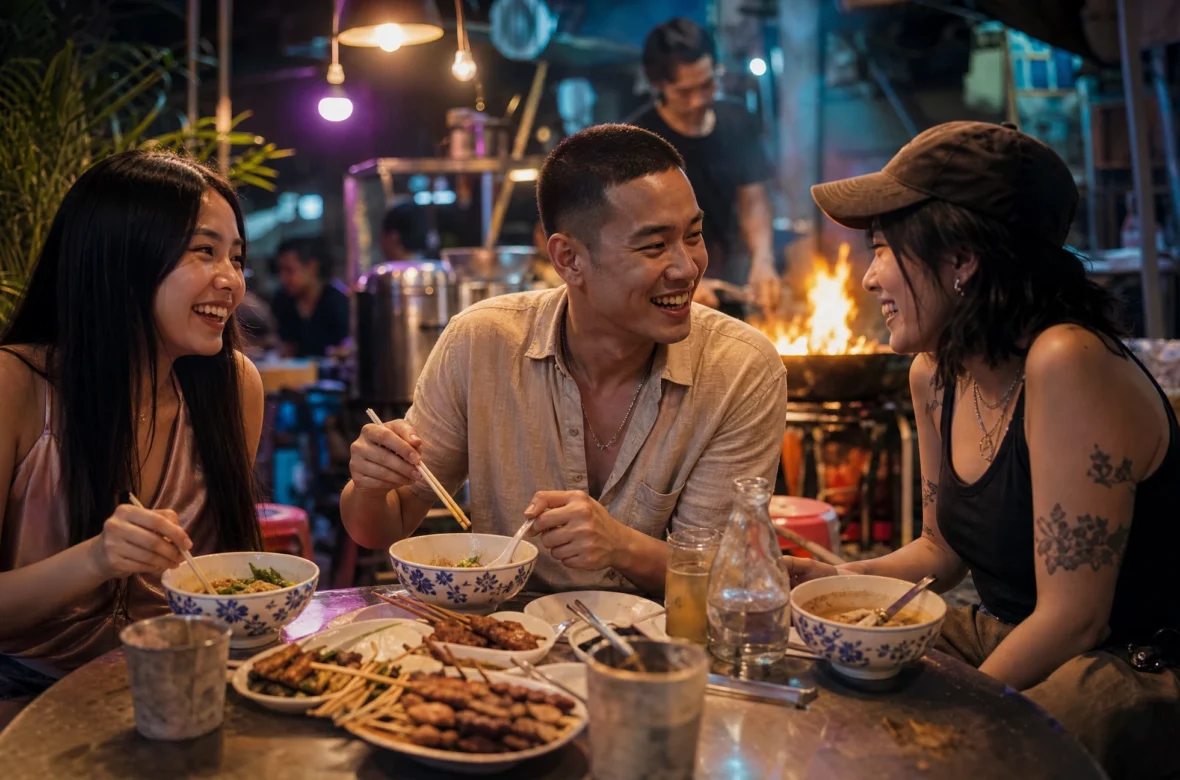
By NaJade · DJ in Bangkok · Published September 29, 2026
Yes, for most people, most of the time — and it’s how most of Bangkok eats every day. The practical rules are simple: choose the busiest stall with high turnover, eat at normal mealtimes, make sure hot food is served properly hot, drink bottled or sealed water, and be more cautious with raw salads and anything that’s clearly been sitting out. Most people who do get an upset stomach recover quickly.
That’s the honest answer, and it deserves a slightly longer one because it’s the question that stops a lot of visitors eating the best food in the city. I eat street food here several times a week, often at hours when nothing else is open, and the anxiety most people arrive with is out of proportion to the actual risk — provided you use a few sensible habits. Here they are. One note first: I’m a DJ, not a doctor. For anything health-specific, including vaccinations, speak to a travel health clinic before you fly.
Turnover is the most important safety signal. A busy stall with a queue of locals is cooking constantly, so ingredients don’t sit around in the heat. Eat when locals eat, choose food cooked in front of you and served hot, drink bottled water, and treat raw vegetables and long-standing buffets with more caution. That covers most of the risk.
What Actually Makes a Stall Safer
| Good signs | Signs to be cautious |
|---|---|
| A queue of locals | An empty stall at peak mealtime |
| Food cooked to order in front of you | Food that’s clearly been sitting out for hours |
| Served properly hot | Food that should be hot but is tepid |
| Vendor uses tongs or gloves | Raw seafood with no refrigeration |
| Office workers eating there at lunch | Flies settling on uncovered food |
| Clean washing-up setup | No visible way to wash dishes |
The Practical Rules
1. Follow the queue
The single most useful rule. A long line of locals means high turnover, which means ingredients are fresh and nothing sits around in the heat. It also means the food is good, which is a nice coincidence. When in doubt, buy from the stall with the longest line.
2. Eat when the locals eat
Food is freshest at genuine mealtimes. If a stall’s busy period is 7pm, eating there at 10pm means you may be getting food that’s been kept warm for hours in tropical heat and humidity. The exception is stalls that exist specifically for late night, like rice soup shops — they’re busy at 2am because that’s their mealtime.
3. Hot food should be hot
Food cooked to order in a blazing wok or straight off a charcoal grill is among the safest things you can eat anywhere. Food that should be hot but arrives lukewarm is the thing to be wary of. Stir-fries, grilled skewers and noodle soups made fresh in front of you are the easy wins.
4. Water: bottled or sealed
Stick to bottled or sealed water rather than tap water. Ice is a common worry — in Bangkok, much of the ice served is commercially produced, and many locals drink it without concern, but if you have a sensitive stomach it’s reasonable to skip it for your first few days.
5. More care with raw food
Raw vegetables and salads carry more risk than cooked dishes because they haven’t been through heat. The same goes for raw or lightly cooked seafood without obvious refrigeration. For fruit, ask vendors to peel or cut it fresh in front of you, and the same for fresh juices.
6. Ease in
Your first day off a long flight is not the day to eat the spiciest, most unfamiliar thing you can find. Start with simple cooked dishes — pad krapow, khao man gai, grilled pork skewers — and build up. Very spicy food isn’t dangerous, but it can upset a stomach that isn’t used to it, which people then mistake for food poisoning.
If You Do Get an Upset Stomach
It happens, and for most people it’s uncomfortable and temporary rather than serious. Rest, keep drinking water, and consider oral rehydration salts, which every pharmacy in Bangkok stocks. Thai pharmacies are everywhere, well-stocked and helpful.
See a doctor rather than waiting it out if you have a high fever, blood in your stool, severe or persistent pain, signs of dehydration, or symptoms lasting more than a couple of days. Bangkok has excellent private hospitals with English-speaking staff, so getting properly checked is easy.
Perspective
- Restaurants aren’t automatically safer. Plenty of travellers report being fine on street food for weeks and then getting sick at an expensive hotel. Kitchen standards vary everywhere, and you can’t see inside a restaurant kitchen.
- Street food is transparent. You can watch your food being cooked, which is more than most restaurants offer.
- This is how the city eats. Millions of people in Bangkok eat street food daily. It isn’t a novelty; it’s the food system.
- Get travel health advice before you fly — a travel clinic can advise on vaccinations appropriate to your trip and your health history.
A Note From NaJade
I’ll be honest about the thing that bothers me: I’ve watched visitors spend a whole week in Bangkok eating in hotel restaurants and international chains because they were nervous, and they went home having essentially skipped the best reason to come. The food on the street is the city. I eat it several times a week, often at 3am after a set, and the rules I follow are just the ones above — busy stalls, hot food, bottled water, a bit more care with raw things. That’s it. The anxiety is understandable and mostly misplaced, and the fix isn’t avoiding street food, it’s choosing well. Start with the busiest stall on your own street tomorrow lunchtime. Point at whatever the person next to you ordered. You’ll almost certainly be fine, and you’ll have eaten something better than anything in your hotel.
More: the Bangkok street food guide, the best markets in Bangkok, and late night food in Bangkok.
Frequently Asked Questions
Is Bangkok street food safe to eat?
How do I choose a safe street food stall?
Is the ice safe in Bangkok?
Is street food safer than restaurants in Bangkok?
What should I do if I get sick from street food?
What street food should I avoid in Bangkok?
About the Author
NaJade is a Bangkok-based DJ playing progressive house, melodic EDM, pop, and Thai music across clubs, rooftops, and weddings in Thailand — which means a lot of his dinners happen at a street stall at 2am. Find him on YouTube, Instagram, and TikTok.
🎧 Listen to his latest set · 💌 Book him for your venue or event