
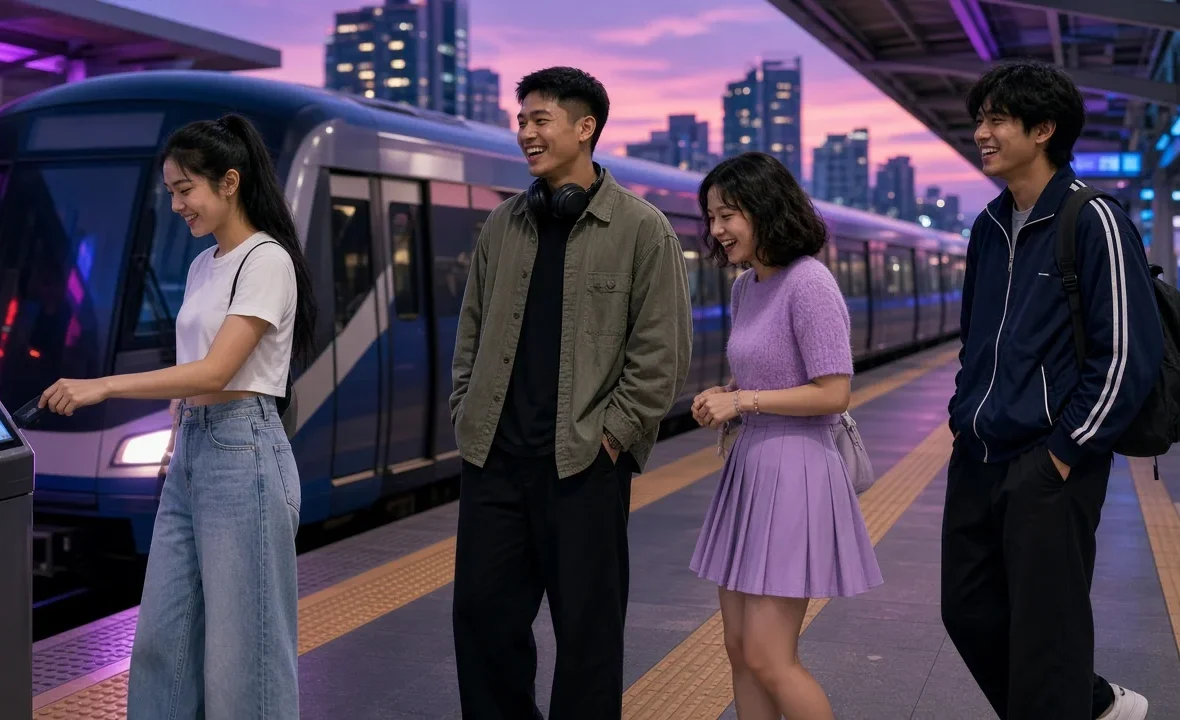
By NaJade · DJ in Bangkok · Published October 20, 2026
The BTS Skytrain is Bangkok’s elevated metro and the quickest way to cross the city centre. Fares run from 17 to 65 baht per trip depending on distance, trains run roughly 6am to midnight every few minutes, and you pay with a single-journey ticket or a stored-value Rabbit card. Contactless bank cards do not yet work on the BTS.
I ride the BTS to most of my gigs in Sukhumvit and Silom, usually with a laptop bag and headphones round my neck, because at 9pm on a Friday it beats any taxi by half an hour. It looks confusing on the map, but once you understand the two main lines and how to pay, it is the easiest part of getting around Bangkok.
BTS fares are 17–65 baht by distance. Buy single tickets at station machines or get a Rabbit card if you will ride often. Trains run about 6am–midnight, every 3–10 minutes. Change to the MRT at Asok, Sala Daeng, Mo Chit or Bang Wa, and to the airport train at Phaya Thai.
The Lines at a Glance
The BTS has two main lines that cross at Siam station, plus a tiny connector line on the Thonburi side.
| Line | Runs between | Useful for |
|---|---|---|
| Sukhumvit Line (light green) | Khu Khot in the north to Kheha in Samut Prakan | Mo Chit/Chatuchak, Ari, Victory Monument, Siam, Asok, Thong Lo, Ekkamai, On Nut |
| Silom Line (dark green) | National Stadium to Bang Wa | Siam, Sala Daeng, Chong Nonsi, Saphan Taksin for river boats |
| Gold Line | Krung Thon Buri to ICONSIAM area (3 stations) | Getting to ICONSIAM and the river’s west bank |
Siam is the main interchange between the two green lines: you simply walk across the platform or change levels. For the full official map and station list, use the BTS official website.
Fares and Tickets
BTS fares are distance-based. A one-stop hop costs 17 baht, and the longest trips on the green lines are capped at 65 baht (the cap rose from 59 baht in November 2025). The short Gold Line charges a flat 17 baht.
| How to pay | Cost | Best for |
|---|---|---|
| Single-journey ticket | 17–65 baht per trip | Visitors riding a few times. Buy at machines (coins, notes, and QR at some machines) or the ticket office |
| Rabbit card | About 100 baht to issue, plus top-up (minimum 100 baht) | Anyone staying more than a few days; no queuing at machines |
| One-Day Pass | Fixed price, unlimited rides that day | Heavy sightseeing days; ask at the ticket office |
| Contactless bank card | Not accepted on BTS yet | Works on the MRT and Airport Rail Link instead |
Since 2025, new Rabbit cards must be registered to the holder, so foreigners need a passport when buying one. Thailand’s politically promoted 20-baht flat fare applies only to registered Thai nationals, so visitors pay the normal fare. Prices and rules change, so double-check at the station.
How to Ride, Step by Step
- Find your destination station on the map above the ticket machines and note its fare.
- Buy a ticket or tap your Rabbit card. Single tickets are small cards; keep them — you need them to exit.
- Go through the gate and check the platform signs for the end station of the direction you want.
- Stand aside at the doors, let people off, then board.
- Tap or insert the ticket again to exit. A single ticket is swallowed at the exit gate.
If you are coming from Suvarnabhumi, change from the Airport Rail Link to the BTS at Phaya Thai — the route is covered in Suvarnabhumi Airport to Bangkok city.
Connections, Hours and Rush Hour
- MRT Blue Line interchanges: Asok (Sukhumvit MRT), Sala Daeng (Si Lom MRT), Mo Chit (Chatuchak Park MRT) and Bang Wa. These are separate systems with separate tickets.
- Other links: Samrong for the Yellow Line, Wat Phra Sri Mahathat for the Pink Line, and Phaya Thai for the Airport Rail Link.
- River boats: Saphan Taksin on the Silom Line connects to Sathorn Pier for the Chao Phraya Express Boat.
- Hours: roughly 6am to midnight, with trains every 3–6 minutes at peak and 6–10 minutes off-peak.
- Rush hour: about 7–9am and 5–7pm on weekdays. Trains between Siam and Asok can be packed; travel light or wait one train.
After midnight you will need a taxi or Grab. For the bigger picture of buses, boats and motorbike taxis, see how to get around Bangkok.
BTS Etiquette Locals Expect
- No eating or drinking on trains or past the gates — and no durian anywhere in the system.
- Queue at the marked lines on the platform, either side of the doors.
- Give priority seats to monks, elderly passengers, pregnant women and children.
- Keep your voice down and phone calls short.
- Take your backpack off in crowded carriages.
These small courtesies go a long way. More on everyday manners in Thai etiquette in Bangkok.
A Note From NaJade
The BTS is honestly the reason I can do two gigs in one night in Bangkok. Traffic on Sukhumvit at 8pm can turn a 4-kilometre ride into an hour, while the train does it in ten minutes. The only thing that has ever caught me out is the midnight cut-off — I once packed up at 12:15 thinking I would ride home, and walked into a locked station. So get a Rabbit card early, learn the Siam and Asok interchanges, and always know your back-up ride for after midnight. Do that and the city feels a lot smaller.
More: how to get around Bangkok, using Grab in Bangkok, where to stay in Bangkok, and bars near BTS Asok. Background: BTS Skytrain on Wikipedia.
Frequently Asked Questions
How much does the BTS Skytrain cost?
Can I use a credit card on the BTS?
Is the Rabbit card worth it for tourists?
What time does the BTS close?
Do the BTS and MRT use the same ticket?
Can you eat or drink on the BTS?
About the Author
NaJade is a Bangkok-based DJ playing progressive house, melodic EDM, pop, and Thai music across clubs, rooftops, and weddings in Thailand — and has lived in the city long enough to have made every one of these mistakes at least once. Find him on YouTube, Instagram, and TikTok.
🎧 Listen to his latest set · 💌 Book him for your venue or event