
By NaJade · DJ in Bangkok · Published September 28, 2026
This guide is part of how to learn to DJ: the complete guide.
Hearing damage is permanent, cumulative and largely preventable — and DJs sit closer to the speakers than anyone in the room. The one piece of gear that protects your whole career.
This is the least exciting article I’ll write about DJing and possibly the most important. Your ears are the only instrument you can’t replace, and a DJ booth is one of the loudest workplaces most people will ever stand in — for hours, repeatedly, for years. The damage is quiet and gradual, and by the time you notice it, it’s already happened. One note first: I’m a DJ, not an audiologist. This is practical guidance from the booth; for anything about your own hearing, see a hearing professional.
Nightclubs have been measured averaging roughly 93 to 110 dB, and around three-quarters of DJs report tinnitus. The safe exposure time shrinks sharply as volume rises, so a single long set can exceed a whole day’s safe dose. Wear musicians’ earplugs every gig, turn the booth monitor down, keep both plugs in while cueing, and get your hearing tested regularly.
How Loud It Actually Is
Research on nightclubs has found average sound levels ranging from roughly 93 to 110 dB, with professional DJs’ average exposure around 96 dB — above the level at which hearing protection is mandatory in many industrial workplaces. In the UK, for example, employers must provide hearing protection once daily exposure reaches 85 dB. Studies of dance music DJs have found around three-quarters report tinnitus.
The key concept is that exposure is volume multiplied by time. Different safety standards calculate it differently, but they agree on the principle: every few decibels louder cuts the safe exposure time roughly in half. At club levels, safe time is measured in minutes, not hours.
| Where you are | Why it matters |
|---|---|
| Behind the decks | Often closer to the monitors than anyone on the floor |
| Your cueing ear | Takes the booth plus headphone level — often the worse ear |
| Long sets | Hours of exposure, repeated weekly |
| Small venues | Harsh, poorly tuned systems can be worse than big rigs |
Why DJs Specifically Are at Risk
The cueing problem is the one people miss. To hear your cue over a loud room, you push the headphone level up to compete — so one ear gets the booth and a loud headphone signal on top. That asymmetric load is why many DJs end up with worse hearing on their cueing side.
Damage also tends to start in the high frequencies. You might hear conversation fine while losing the clarity of hi-hats and vocals — exactly what you need to mix well. Tinnitus, a persistent ringing or buzzing, is a common early sign, and while it can be temporary after one loud night, repeated exposure makes it more likely to become permanent.
What to Wear
- Musicians’ earplugs (filtered). Reduce volume relatively evenly across frequencies, so music sounds natural, just quieter. The right starting point for most DJs.
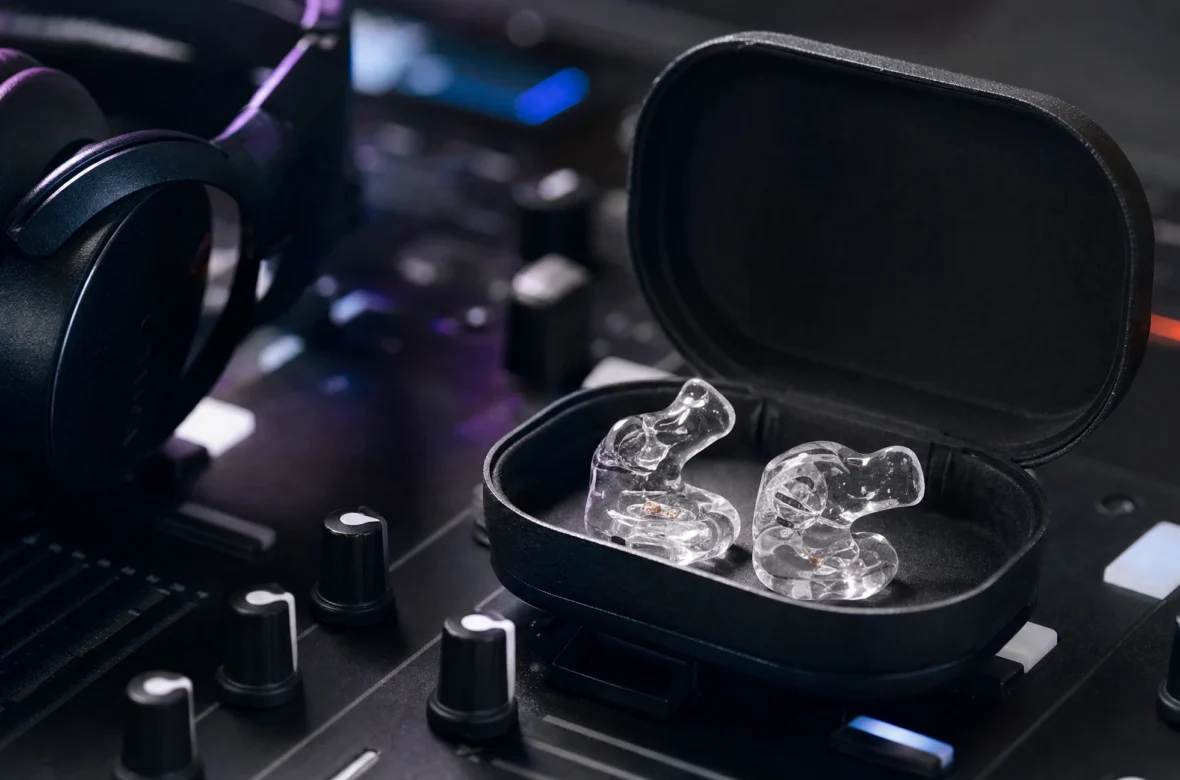
- Custom-moulded earplugs. Made from impressions of your ear canal by a hearing professional. More comfortable for long sets, better seal, often with interchangeable filters. The best long-term investment.
- Foam earplugs. Protect well but muffle the high end, making clean mixing harder. Far better than nothing — carry a pair as backup.
- In-ear monitors. Used by some DJs to hear their cue at controlled levels with isolation from the room.
Habits That Matter as Much as Plugs
- Turn the booth monitor down. Many DJs set it high and leave it there all night. Run it as low as lets you mix.
- Keep both plugs in while cueing. Pulling one out exposes that ear to the full booth level. Nudge your headphone level up slightly instead.
- Don’t clip the mixer. Distorted signal is fatiguing and harsh — see gain staging for DJs.
- Take quiet breaks between sets, away from the speakers.
- Give your ears recovery time after loud nights.
- Get your hearing tested regularly. A baseline test lets you notice change before it becomes obvious.
If you notice ringing that doesn’t fade, muffled hearing, or sensitivity to everyday sounds, see a hearing professional promptly rather than waiting.
A Note From NaJade
I resisted earplugs for longer than I should have, for the reason most DJs do: I thought they’d ruin the sound and make me mix worse. Proper musicians’ plugs don’t — the music is just quieter, and after a couple of gigs you stop noticing them. What changed my mind was hearing other DJs talk about tinnitus that never went away, and realising there’s no version of this job where you get your hearing back. Damage is cumulative and permanent. The cheapest decision I’ve made in my career is also the one I’m most sure about. If you’re twenty-two and reading this thinking it’s a problem for later, it isn’t — later is made of every gig you play now. Buy a pair of proper earplugs this week, put them in your gig bag, and turn the booth monitor down tonight.
Related: what to bring to a DJ gig, gain staging for DJs, DJ booth etiquette, and the DJ headphones guide.
Frequently Asked Questions
Do DJs need hearing protection?
What earplugs are best for DJs?
Can you mix properly with earplugs in?
Why is one ear often worse for DJs?
Is tinnitus permanent?
How can DJs reduce hearing damage besides earplugs?
About the Author
NaJade is a Bangkok-based DJ playing progressive house, melodic EDM, pop, and Thai music across clubs, rooftops, and weddings in Thailand. He teaches beatmatching and mixing to beginners both in person in Bangkok and online over Zoom. When he’s not behind the decks, he’s documenting the journey on YouTube, Instagram, and TikTok.