
By NaJade · DJ in Bangkok · Published September 29, 2026
This guide is part of DJ headphones explained: the complete guide.
Pioneer’s flagship headphone — military-tested, comfortable for four-hour sets, and reaching frequencies no rival claims. Worth $350? Here’s the honest verdict.
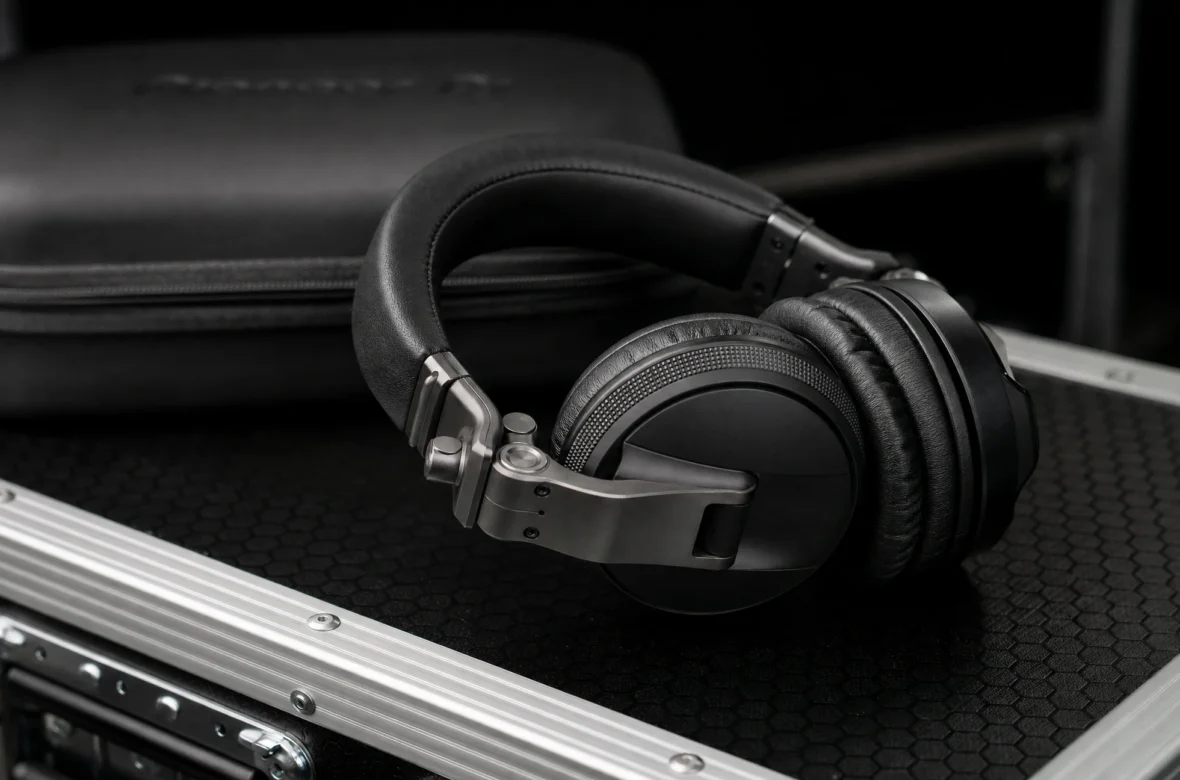
The Pioneer DJ HDJ-X10 is what the company builds when it aims at the top: its flagship over-ear DJ headphone, developed with input from professional DJs, with newly designed 50mm drivers claiming a 5Hz–40kHz response — the first DJ headphone to reach that range — and a chassis shock-tested to a US military standard. It’s also, at around $350, one of the most expensive mainstream DJ headphones you can buy, in a market where the $150 Sennheiser HD 25 is the entrenched standard. So the question isn’t whether it’s good — it clearly is — but who it’s actually worth it for.
The Pioneer HDJ-X10 (~$350) is the flagship over-ear DJ headphone — 50mm HD drivers with a 5Hz–40kHz response, military-standard shock testing, a detachable 4-pin locking cable, and the most comfortable long-session fit in the DJ headphone world. The sound is detailed and bass-forward without mud. The catches: it’s premium money, it runs warmer than on-ears in hot booths, and the HD 25 does the core job for $200 less.
HDJ-X10 at a Glance
| Spec | HDJ-X10 | What it means for you |
|---|---|---|
| Type | Closed-back, over-ear | Seals around the ear; long-session comfort |
| Drivers | 50mm HD, 5Hz–40kHz | First DJ headphone with hi-res range |
| Weight | ~328g | Light for its size; balanced fit |
| Durability | Shock-tested to US military standard | Built for touring abuse |
| Cable | Detachable, 4-pin locking connector; coiled + straight included | Replaceable; cleaner signal path |
| Swivel | Rotating cups, fold-flat design | One-ear monitoring; packs into its case |
| Extras | Hard carry case, spare pads ecosystem | Tour-ready out of the box |
| Price | ~$350 (list up to $449) | Premium tier; the comfort pick |
(Prices vary by region and retailer — check current pricing on the official Pioneer DJ site before buying.)
The Comfort Argument
Here’s the honest core of the X10’s appeal, and it isn’t the frequency chart: reviewers who’ve worn everything consistently call it the most comfortable over-ear DJ headphone made. The headband tension is judged just right — secure without the “aurally induced headlock” — the plush pads don’t crush your ears, and at 328g it’s light for a full-size over-ear. DJs report four-hour sets and full travel days without fatigue. If you’ve tried the HD 25 and found the on-ear clamp unbearable — and plenty of people do — this is the professional-grade alternative that solves exactly that problem.
What’s Great About the HDJ-X10
Detailed, Bass-Forward Sound Done Right
The 50mm drivers deliver what one long-time professional summarised perfectly: “detailed and bass-forward without being muddy.” The low end has genuine depth and punch from a bass-reflex chamber — important for DJing — while a lift around 12kHz keeps the top end crisp and airy. Left-right imaging is unusually accurate for the class, which makes wide electronic production sound spacious. It’s a modern, energetic signature: less clinical than the HD 25, more controlled than bass-first fashion headphones.
Genuinely Tour-Grade Build
The shock-testing to a US military standard sounds like marketing until you handle one: solid metal construction, screwed (not glued) connections, robust swivel joints, and a hard case that would survive a tour van. The cable is detachable with a 4-pin locking connector — no accidental unplugs mid-set, easy replacement when it eventually wears — and both coiled and straight cables come included. This is a headphone designed around the actual failure points of DJ life.
A Flagship That Doubles for Listening
Because the tuning is enjoyable rather than purely clinical, the X10 works as a travel and pleasure-listening headphone in a way the HD 25 doesn’t really try to — several owners use one pair for the booth, the plane, and the sofa. At this price, that dual-use case is part of the value math.
What to Watch Out For
- The price. At $350+ it costs more than two HD 25s. You’re paying for comfort, build, and refinement — the core DJ job is done equally well for far less.
- Heat. Sealed over-ear cups run warm. In an un-air-conditioned Bangkok booth in April, that’s a real consideration on-ears don’t have.
- Isolation is good, not HD 25 good. Over-ear sealing isolates well, but the HD 25’s clamp still wins in the loudest rooms.
- Bulk. Fold-flat helps, but it’s a full-size headphone with a full-size case — the HD 25 disappears into a jacket pocket.
- The 40kHz claim is marketing-adjacent. Nobody hears 40kHz; the audible benefit is the driver quality, not the number.
- Cheaper siblings exist for a reason. The HDJ-X7 and X5 look similar but aren’t the same headphone — reviewers find the gap to the X10 real. Don’t pay X10 money expecting X5 performance or vice versa.
Who the HDJ-X10 Is Really For
It’s for working DJs who play long sets and want maximum comfort with professional durability; for anyone who finds on-ear designs painful; for DJs who want one premium pair for booth, travel, and listening; and for Pioneer-ecosystem loyalists completing a rig. Skip it if budget matters (the HD 25 does the core job for $200 less, and the HDJ-CUE1 for $280 less), if you play mostly hot outdoor venues where on-ears run cooler, or if you need studio-flat monitoring for production, where the ATH-M50x is the better crossover.
A Note From NaJade
The X10 is the headphone I point people to when they tell me the HD 25 hurts — and that’s not faint praise, because for a meaningful share of DJs the on-ear clamp genuinely is a dealbreaker, and comfort you’ll actually wear beats isolation you leave at home. It’s a beautifully engineered thing: the fit is superb, the build shrugs off touring, and the sound is lively in a way that makes long prep sessions enjoyable. My honest framing on the price: you’re not buying better beatmatching — a $69 CUE1 cues a kick drum just fine — you’re buying four-hour comfort, decade-grade build, and one pair that covers the booth and the plane. If that describes your life, it’s worth every baht. If you’re a beginner, put the $280 difference into music and lessons instead, and come back to this when your calendar justifies it. Your ears and your track selection are the career; the headphone just needs to not get in the way.
Compare all the options in my complete DJ headphones guide, or see the rest of the ecosystem in the Pioneer DJ range guide. Want help choosing for your situation? My DJ lessons run in person in Bangkok or online over Zoom.
Frequently Asked Questions About the HDJ-X10
Is the Pioneer HDJ-X10 worth the money?
HDJ-X10 vs Sennheiser HD 25: which is better?
What’s the difference between the HDJ-X10, X7, and X5?
Is the HDJ-X10 comfortable for long sets?
Does the HDJ-X10 have a detachable cable?
Is the HDJ-X10 good for music production too?
About the Author
NaJade is a Bangkok-based DJ playing progressive house, melodic EDM, pop, and Thai music across clubs, rooftops, and weddings in Thailand. He teaches beatmatching and mixing to beginners both in person in Bangkok and online over Zoom. When he’s not behind the decks, he’s documenting the journey on YouTube, Instagram, and TikTok.