
By NaJade · DJ in Bangkok · Published October 20, 2026
This guide is part of EDM genres explained.
Ask ten people what dubstep sounds like and you will get two completely different answers.
Some will describe dark, spacious South London records built around sub-bass you feel in your chest. Others will describe screaming, robotic drops from a festival main stage. Both are dubstep — they are just different chapters of the same story. Understanding that split is the key to understanding the genre, and to mixing it well.
Dubstep is electronic dance music at around 140 BPM with a half-time feel: the snare lands on the third beat, so it sounds like 70 BPM. It began in South London around 2000, built on deep sub-bass and space, then evolved into the louder, aggressive American style often called brostep.
What Dubstep Sounds Like
- Tempo: around 138–142 BPM, most often 140.
- Half-time rhythm: the snare hits on beat three of each bar instead of two and four, so the groove feels slow and heavy even though the tempo is fast.
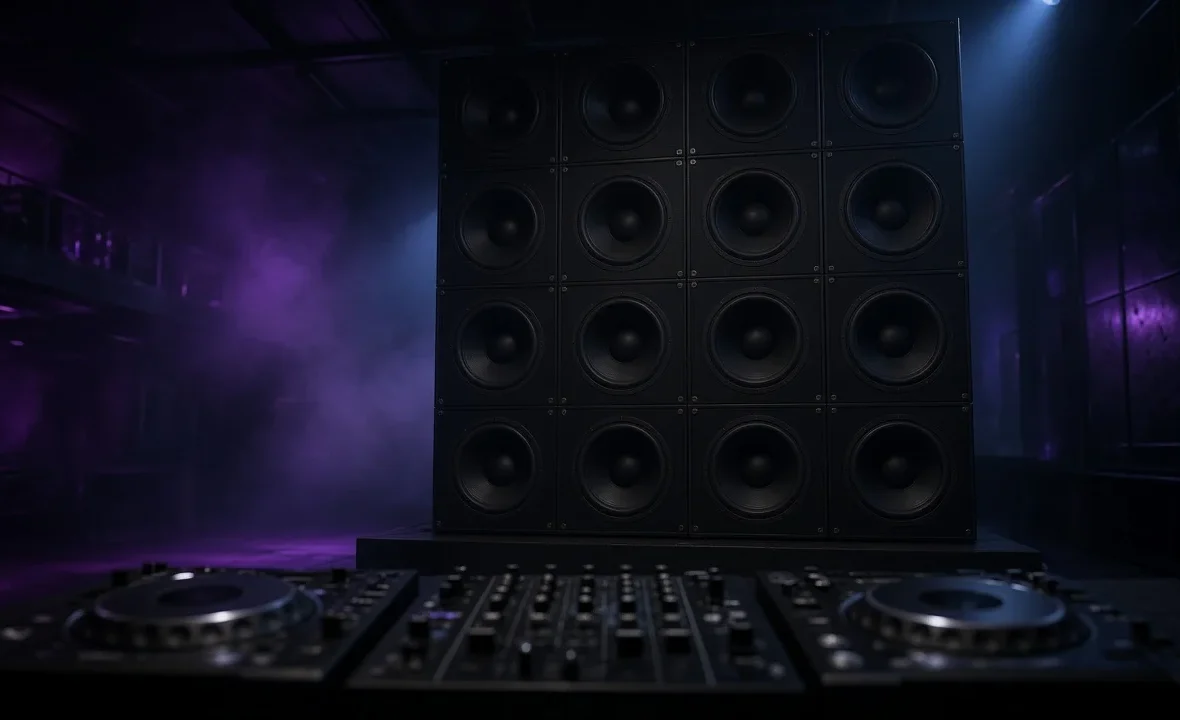
- Sub-bass: the bassline sits very low and is designed for big sound systems. On small speakers, much of it disappears.
- Wobble and modulation: bass sounds that move rhythmically, created by modulating a filter or the sound’s shape.
- Space: early dubstep leaves a lot of silence and echo, borrowed from Jamaican dub reggae — hence the “dub” in the name.
That half-time feel is the defining trait. It is also why dubstep sits naturally next to drum and bass at 170–175 BPM, which uses a similar “fast but heavy” approach.
Where Dubstep Came From
Dubstep grew out of the UK garage and 2-step scene in South London around 1999–2002. Producers took the shuffling rhythms of UK garage, stripped out the vocals and polish, and pushed the bass lower and darker, mixing in influences from dub reggae, jungle and grime.
Key places and names in that first wave:
- Big Apple Records in Croydon — a record shop where early producers including Skream and Benga met and shared music.
- FWD>> — the club night at Plastic People in East London that became the scene’s home.
- DMZ — the Brixton night run by Digital Mystikz (Mala and Coki) and Loefah, famous for its “meditate on bass weight” ethos.
- Hyperdub — Kode9’s label, which released Burial’s atmospheric, critically acclaimed albums.
- Mary Anne Hobbs — whose 2006 BBC Radio 1 show “Dubstep Warz” introduced the sound to a much wider audience.
For a deeper history, Wikipedia’s dubstep entry is a good starting point.
From Basements to Main Stages
Around 2009–2012, dubstep crossed the Atlantic and changed shape. American producers, led most visibly by Skrillex, made it louder, brighter and more aggressive, with mid-range bass sounds that screamed and growled rather than rumbled. The style, sometimes called brostep, filled festival main stages, and Skrillex won Grammy Awards for it in 2012. Pop and hip-hop artists started borrowing the drops. Wikipedia has a separate overview of brostep and how it split from the UK sound.
| Style | Roughly when | What it sounds like |
|---|---|---|
| UK / “deep” dubstep | Early 2000s onwards | Dark, minimal, sub-bass heavy, lots of space |
| Brostep | Around 2010 onwards | Loud, aggressive mid-range bass, big builds and drops |
| Riddim | Mid-2010s onwards | Repetitive, minimal, hypnotic bass patterns |
| Melodic dubstep | 2010s onwards | Emotional chords and vocals with heavy drops |
| Tearout / deathstep | Late 2010s onwards | Extremely aggressive, metal-influenced sound design |
Today, all of these coexist. The original deep sound still has a devoted global community, while the heavier American styles dominate bass-music festivals. It is one branch of the wider family mapped out in EDM genres explained.
How DJs Mix Dubstep
- Think in 16-bar phrases. Dubstep tracks are built around clear intros, builds and drops. Counting phrases is essential — see how to count bars and phrases.
- Mix drop to drop — carefully. A classic technique is to line up two tracks so their drops hit together, or to swap from one drop straight into the next. It is dramatic and unforgiving.
- Manage the bass. Two sub-heavy tracks together will turn to mud. Cut the low EQ on the incoming track until the swap. More in how to use EQ when DJing.
- Use short blends. Long blends rarely work with dense bass sound design. Quick cuts, echo-outs and spinbacks are common.
- Change tempo with half-time. Because dubstep feels like 70 BPM, DJs sometimes move to and from hip-hop or trap, or jump up to drum and bass at 170+.
A Note From NaJade
Dubstep isn’t my genre — my sets live around 122–126 BPM in progressive house — but I have a lot of respect for it. The first time I heard proper deep dubstep on a big rig, I understood that bass can be a physical experience, not just a sound. That changed how I think about low end in my own sets, especially when I play big rooms in Bangkok with serious subs. Even if you never play a dubstep record, spend an hour with early DMZ and Hyperdub releases. It will teach you more about space, tension and weight than most tutorials.
Related: EDM genres explained, what is UK garage, what is drum and bass, and what is hardstyle.
Frequently Asked Questions
What is dubstep music?
What BPM is dubstep?
Who invented dubstep?
What is the difference between dubstep and brostep?
Is dubstep still popular?
Why is it called dubstep?
About the Author
NaJade is a Bangkok-based DJ playing progressive house, melodic EDM, pop, and Thai music across clubs, rooftops, and weddings in Thailand. He teaches beatmatching and mixing to beginners both in person in Bangkok and online over Zoom. When he’s not behind the decks, he’s documenting the journey on YouTube, Instagram, and TikTok.