
By NaJade · DJ in Bangkok · Published November 11, 2026
Yes, Hua Lamphong station is still open. Since 19 January 2023, most long-distance and express trains start from Krung Thep Aphiwat Central Terminal instead, but Hua Lamphong still handles ordinary and commuter trains, plus the Eastern line towards Chachoengsao, Pattaya and Aranyaprathet. It is linked to Hua Lamphong MRT station and is worth visiting for its 1916 architecture.
A lot of travellers turn up at Hua Lamphong with a sleeper ticket to Chiang Mai and discover their train now leaves from somewhere else. Others assume the whole station has shut. Neither is quite right. I pass through this part of the city often — it sits on the edge of Chinatown, close to some of my favourite late-night food — so here is the simple version of what is happening.
Hua Lamphong is open but quieter. Most long-distance trains (Chiang Mai sleepers, southern expresses) depart from Krung Thep Aphiwat. Hua Lamphong keeps ordinary and commuter trains and Eastern line services. Always check the departure station printed on your ticket, and allow time to get between the two.
What Changed in 2023
For more than a century, Hua Lamphong — officially Bangkok Railway Station, or Krung Thep Station — was the main gateway for trains across Thailand. On 19 January 2023, the State Railway of Thailand moved most long-distance services to the new Krung Thep Aphiwat Central Terminal in Bang Sue, about 9 km north. The move freed up roads around the old station and shifted inter-city rail to a modern hub linked to the Red Line commuter trains.
The old station did not close. It simply became a smaller hub for slower and shorter-distance trains. For the full picture of the new terminal, see my guide to Krung Thep Aphiwat station.
Which Trains Still Use Hua Lamphong?
| Service | Departs from | Notes |
|---|---|---|
| Long-distance express and sleeper trains (Chiang Mai, Surat Thani, Nong Khai, Ubon) | Krung Thep Aphiwat | Most special express and rapid services |
| Ordinary and commuter trains on the Northern, Northeastern and Southern lines | Hua Lamphong | Slow, cheap, fan or basic seats — e.g. to Ayutthaya |
| Eastern line trains | Hua Lamphong | Towards Chachoengsao, Pattaya and Aranyaprathet |
| Maeklong line | Neither — Wongwian Yai | Separate line to the Maeklong railway market |
Timetables and departure stations do change, so always check the station on your ticket or on the State Railway of Thailand website before you travel. If you are heading north, my Bangkok to Ayutthaya guide covers both the cheap ordinary trains and faster options, and Bangkok to Pattaya explains why most people still take the bus.
Getting to Hua Lamphong
- MRT: Hua Lamphong station on the Blue Line connects to the railway station by an underground passage. This is the easiest way in.
- Taxi or Grab: straightforward, but traffic around Rama IV and Chinatown can be slow in the evening.
- On foot from Chinatown: Yaowarat Road is about a 10–15 minute walk, and Wat Traimit (the Golden Buddha) is closer still.
- Between the two stations: take the MRT Blue Line to Bang Sue, which connects to Krung Thep Aphiwat. Allow at least 45 minutes.
More on the metro system in the MRT in Bangkok, and on choosing between transport options in how to get around Bangkok.
Why Hua Lamphong Is Worth Visiting Anyway
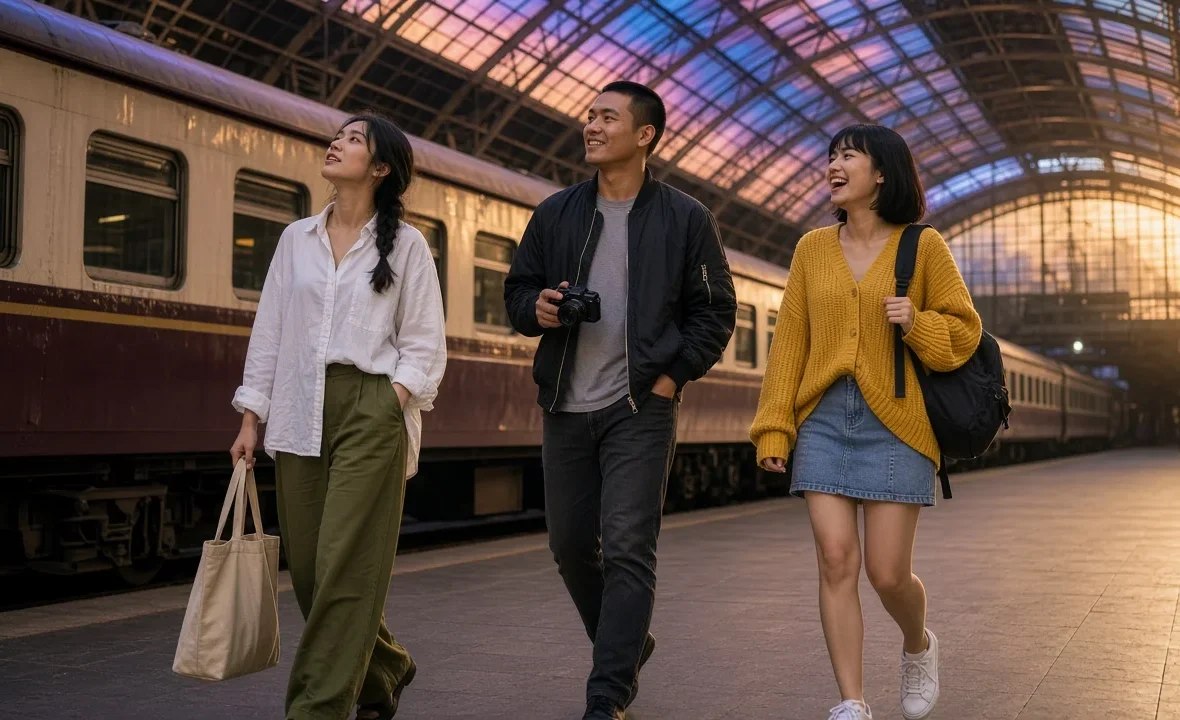
Even if you never board a train here, the building is one of Bangkok’s great pieces of architecture. It opened on 25 June 1916, designed in an Italian Neo-Renaissance style by Mario Tamagno and Annibale Rigotti, with a vaulted iron-and-glass hall and a big arched front window. The waiting hall still has its wooden benches, and the platforms are full of old-school railway character — ideal for photos in the soft late-afternoon light.
There is a small history display about Thai railways, regular temporary exhibitions and events in the main hall, and the State Railway of Thailand has long-term plans to redevelop the surrounding land while keeping the historic buildings. Wikipedia’s Hua Lamphong article has a good history. Combine your visit with Wat Traimit and dinner in Chinatown.
Practical Tips
- Check your ticket twice. The departure station is printed on it. Do not assume Hua Lamphong.
- Book long trips ahead. Sleeper trains sell out around holidays; book through the official SRT channels or the station counter.
- Dress for heat. The hall is airy but not air-conditioned.
- Ignore “helpers”. If someone outside says your train is cancelled and offers a bus or tour, walk to the official ticket counter instead.
- Keep small notes. Food stalls and ordinary-train fares are cheap and cash is easiest.
A Note From NaJade
I took my first long train in Thailand from Hua Lamphong years ago — a slow overnight ride north with a backpack, a bag of snacks and a speaker I was too shy to play. When the big trains moved to the new terminal, I was half expecting the old station to feel dead. It does not. It feels like Bangkok slowed down for a moment. Commuters with bags of vegetables, monks waiting on benches, kids running under the arches. I still walk through sometimes before a gig in Chinatown, just to sit in that hall for ten minutes. If you love the city’s history, give it an hour, even without a ticket.
Related: Krung Thep Aphiwat station, the MRT in Bangkok, Chinatown Bangkok, and Bangkok to Ayutthaya.
Frequently Asked Questions
Is Hua Lamphong station closed?
Do trains to Chiang Mai leave from Hua Lamphong?
How do I get from Hua Lamphong to Krung Thep Aphiwat?
Which MRT station is closest to Hua Lamphong?
When was Hua Lamphong station built?
Is Hua Lamphong worth visiting?
About the Author
NaJade is a Bangkok-based DJ playing progressive house, melodic EDM, pop, and Thai music across clubs, rooftops, and weddings in Thailand — and has lived in the city long enough to have made every one of these mistakes at least once. Find him on YouTube, Instagram, and TikTok.
🎧 Listen to his latest set · 💌 Book him for your venue or event