
By NaJade · DJ in Bangkok · Published November 13, 2026
Chinese New Year in Bangkok is celebrated mainly on Yaowarat Road in Chinatown. In 2027 it falls on Saturday 6 February (Year of the Goat), and in 2028 on Wednesday 26 January (Year of the Monkey). It isn’t a national public holiday, so the rest of the city runs as normal — but Chinatown becomes one of the reddest, busiest street celebrations of the year.
Bangkok has one of the oldest and largest Thai-Chinese communities in the world, and for a few days each year you can feel it everywhere: red shirts on the BTS, offerings outside shophouses, gold shops packed from opening time. As a DJ I’ve played plenty of new-year parties, but the street version in Yaowarat is a different thing entirely. Here’s how it works and how to enjoy it without spending the night stuck in a crowd.
Go to Yaowarat on the evening of Chinese New Year or the days around it, take the MRT to Wat Mangkon, wear something red and comfortable, carry cash and expect huge crowds. The official stages and opening ceremony sit near the Chinatown Gate at Odeon Circle. Offices and most shops elsewhere in Bangkok stay open.
When Is Chinese New Year in Bangkok?
The date follows the lunar calendar, so it moves every year, landing between late January and mid-February.
| Year | Chinese New Year’s Day | Zodiac animal |
|---|---|---|
| 2026 | Tuesday 17 February | Horse |
| 2027 | Saturday 6 February | Goat |
| 2028 | Wednesday 26 January | Monkey |
Is it a public holiday? Not nationally. Timeanddate lists it as an observance in Thailand: government offices, malls and most businesses keep normal hours. Some family-run shops in Chinatown — including a few of the gold shops — may close for a day or two, especially around the day of worship, so don’t plan a Chinatown shopping trip for that week.
Where the Celebrations Happen
The heart of it is Yaowarat Road in Samphanthawong district. The official programme is usually set up around the Chinatown Gate at Odeon Circle, right beside Wat Traimit and the Golden Buddha. From there the party spreads along Yaowarat and into the side streets, with Chinatown’s food stalls running late.
- Opening ceremony: traditionally presided over by a senior member of the royal family, most often Princess Maha Chakri Sirindhorn, as the Bangkok Post has reported.
- Performances: lion and dragon dances, Chinese opera, Thai-Chinese cultural shows and concert stages.
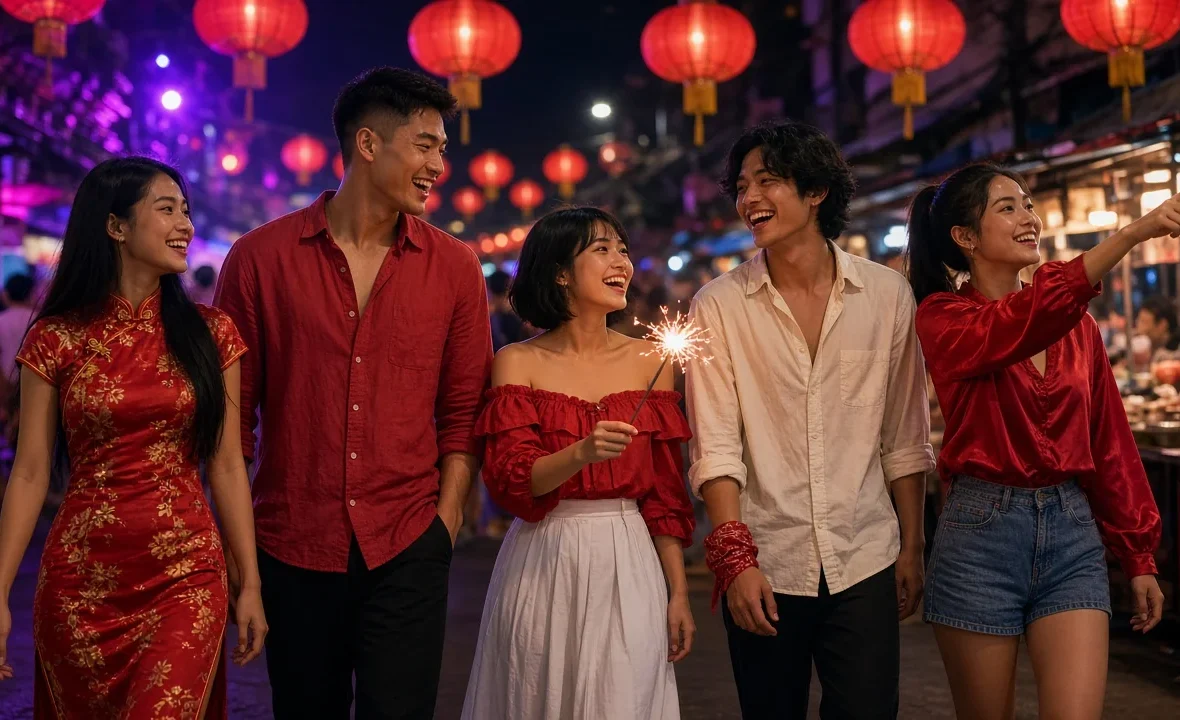
- Lights and decorations: red lanterns across the road and light installations around the gate.
- Temples: Wat Mangkon Kamalawat, Bangkok’s best-known Chinese temple, fills with people making offerings and shaking fortune sticks.
One honest caveat: the official programme isn’t guaranteed every year. In 2026 the Yaowarat festival was cancelled as the country mourned Queen Mother Sirikit, although food stalls stayed open and people still came. Check the Tourism Authority of Thailand announcements a week or two before you go.
The Three Days and Their Customs
For Thai-Chinese families, Chinese New Year is really three days, each with its own purpose:
| Day | Thai name | What happens |
|---|---|---|
| Day before New Year’s Eve | Wan Chai (spending day) | Shopping for offerings, new red clothes, a deep clean of the house |
| New Year’s Eve | Wan Wai (worship day) | Offerings of chicken, duck, pork, fruit and sweets to ancestors; joss paper burned; family dinner |
| New Year’s Day | Wan Thiao (visiting day) | Red clothes, visits to relatives and temples, ang pao for children and younger family |
- Ang pao are red envelopes of money, traditionally given by elders and the married. These days plenty arrive by banking app.
- Wear red for luck. Avoid all-black or all-white outfits, which are linked with mourning.
- Don’t sweep or clean once the new year begins — you’d be sweeping the luck away.
- At temples, cover shoulders and knees and follow the general Thai etiquette you’d use anywhere else.
What to Eat
Yaowarat is already Bangkok’s best street-food strip, and Chinese New Year adds the symbolic dishes. Look for whole steamed fish (abundance), long uncut noodles (long life), mandarin oranges (gold and luck), dumplings and khanom kheng, the sticky rice cake also known as nian gao. Snack your way along the road rather than queueing for one famous stall — my Bangkok street food guide covers how to choose. Don’t confuse it with the meat-free Vegetarian Festival, which comes to Yaowarat in October.
Practical Tips for the Night
| Tip | Why |
|---|---|
| Take the MRT to Wat Mangkon | The Blue Line station is a short walk from Yaowarat; roads around it jam solid |
| Go early evening | You see the lights and eat before the peak crowd arrives |
| Carry cash in small notes | Most stalls are cash or QR only, and change runs short |
| Use a front pocket or cross-body bag | Shoulder-to-shoulder crowds are perfect for pickpockets |
| Don’t plan on a taxi out | Yaowarat is often closed to traffic; walk back to the MRT instead |
| Wear comfortable shoes | You’ll be on your feet for hours on uneven pavement |
New to the metro? Read how to use the MRT in Bangkok before the night — buying a token in a packed station is no fun.
A Note From NaJade
The first time I went to Yaowarat for Chinese New Year I made every mistake: took a taxi, sat in traffic for forty minutes, then walked the last stretch anyway. Now I take the MRT, eat my way down the road and leave before the crowd peaks. What I love about it is that it isn’t a show put on for visitors — it’s families doing what they’ve done for generations, and the rest of us are welcome to join in. Wear red, be patient, say “sin chia yu ee, sin nee huat chai” to the shopkeepers, and you’ll get a smile every time. It’s Bangkok at its most generous.
More: Chinatown Bangkok, Songkran in Bangkok, Loy Krathong in Bangkok, and Wat Traimit.
Frequently Asked Questions
When is Chinese New Year 2027 in Bangkok?
Is Chinese New Year a public holiday in Thailand?
Where is the best place to celebrate Chinese New Year in Bangkok?
How do I get to Yaowarat for Chinese New Year?
What should I wear for Chinese New Year in Bangkok?
What is ang pao?
About the Author
NaJade is a Bangkok-based DJ playing progressive house, melodic EDM, pop, and Thai music across clubs, rooftops, and weddings in Thailand — and has lived in the city long enough to have made every one of these mistakes at least once. Find him on YouTube, Instagram, and TikTok.
🎧 Listen to his latest set · 💌 Book him for your venue or event