
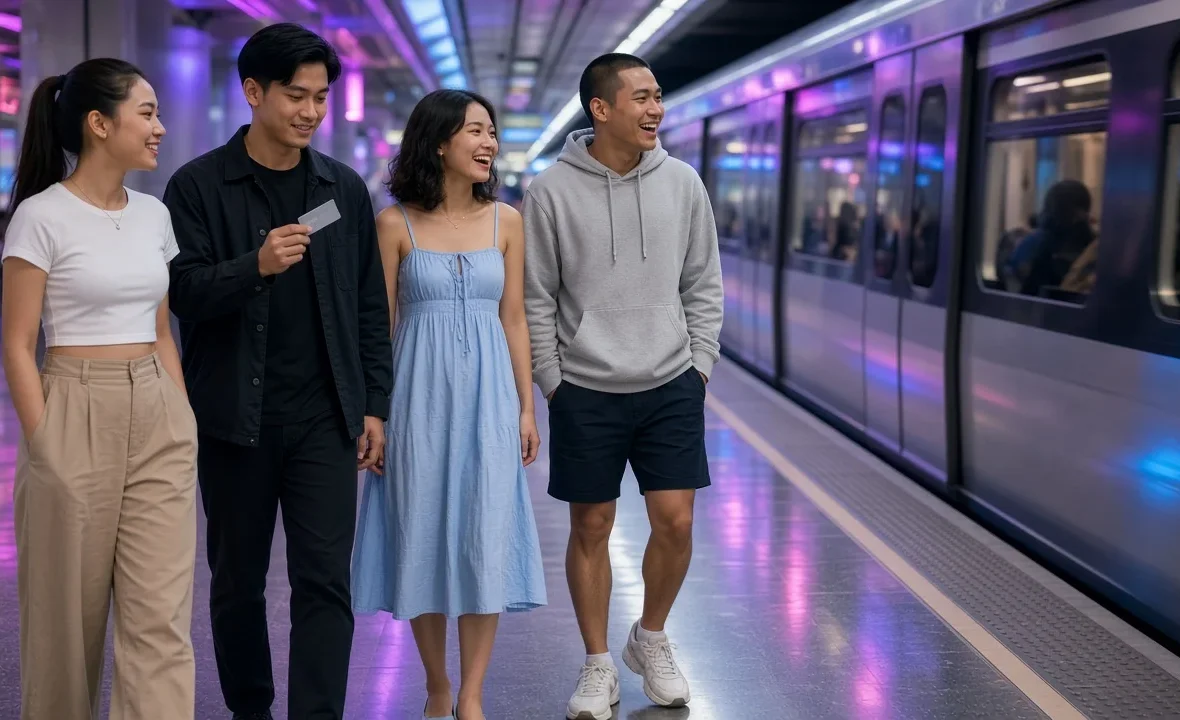
By NaJade · DJ in Bangkok · Published October 20, 2026
The MRT is Bangkok’s underground metro. The main Blue Line runs a loop through Sukhumvit, Silom, Chinatown and the old town, with fares of 17–44 baht per trip. The easiest way to pay is to tap a contactless Visa or Mastercard at the gate; single-journey tokens from the station machines also still work. Trains run roughly 6am to midnight.
I use the MRT more than any other line in the city, mostly because it reaches the places the BTS Skytrain doesn’t — Chinatown, Wat Pho, Hua Lamphong and the weekend market. It is cool, cheap and clean, and once you understand how to pay it is simpler than the Skytrain. Here is everything a visitor needs, with the payment changes from 2026 included.
Tap a contactless bank card at the gate and tap the same card on the way out — that is the whole system on the Blue Line. Fares are 17–44 baht. Tokens still work for single trips. Old MRT stored-value cards stopped working in June 2026, and food, drinks and durian are banned inside.
The MRT Lines You Will Actually Use
| Line | Route | Useful for visitors? |
|---|---|---|
| Blue Line | Underground loop: Sukhumvit, Silom, Hua Lamphong, Chinatown, the old town, Chatuchak and across the river | Yes — this is the one |
| Purple Line | Elevated, Tao Poon to Nonthaburi | Rarely, unless you stay in Nonthaburi |
| Yellow Line | Monorail down the east side from Lat Phrao | Occasionally, for eastern suburbs |
| Pink Line | Monorail across the north, Nonthaburi to Min Buri | Mainly for Impact Muang Thong Thani events |
For most trips you will combine the Blue Line with the BTS. Our BTS Skytrain guide covers the other half, and how to get around Bangkok explains where boats, Grab and taxis fit in.
MRT Fares and How to Pay
Blue Line fares run from 17 to 44 baht depending on distance, the current range since July 2026. There are no return tickets or tourist passes for the Blue Line, so most visitors simply pay per ride.
| Payment | How it works | Good to know |
|---|---|---|
| Contactless Visa / Mastercard | Tap the card on the gate reader in and out | Easiest option. Use the same card both ways. Your bank may add a foreign-transaction fee |
| Single-journey token | Buy at the machine or ticket office, tap to enter, drop in the slot to exit | Still sold; planned to be replaced by QR tickets from 2027 |
| Old MRT stored-value card | No longer accepted | Ended on the Blue and Purple Lines on 1 June 2026; refunds at ticket offices |
| Rabbit card | Not valid on the MRT | Rabbit is for the BTS only |
Bangkok’s rail fares are in flux: a cap of 45 baht per trip across all lines has been approved in principle for 2027, but the details were still being finalised in late 2026. Check the MRT operator’s website before relying on any new fare, and see The Nation’s report on the 2026 card changes for the background.
How to Ride, Step by Step
- Walk through the bag check. Every station entrance has a security point. Open your bag if asked; it takes seconds.
- Decide how to pay. Contactless card ready, or buy a token at the machine — choose your destination on the touchscreen and pay with coins or small notes.
- Tap in at the gate. Contactless cards and tokens use the same reader.
- Follow the colour and direction signs. Platforms are labelled by the final station on the loop, so know which end you are heading towards.
- Tap out with the same card, or insert your token into the slot. Using a different card on exit causes problems with fares.
Key Stations and Interchanges
- Sukhumvit — connects to BTS Asok. The busiest interchange for visitors.
- Silom — connects to BTS Sala Daeng, next to the Silom and Patpong area.
- Chatuchak Park / Kamphaeng Phet — for the weekend market, next to BTS Mo Chit.
- Phetchaburi — walk to Makkasan for the Airport Rail Link.
- Wat Mangkon — the heart of Chinatown.
- Sanam Chai — a short walk to Wat Pho and the river.
- Bang Sue — for Krung Thep Aphiwat, the main long-distance rail station.
MRT Rules Visitors Miss
| Rule | Detail |
|---|---|
| No food or drinks | Not even water bottles open on the train — finish it before the gate |
| No durian | Strong-smelling fruit is banned across Bangkok’s rail network |
| Priority seats | Leave them for monks, older people, pregnant women and children |
| Rush hour | Roughly 7–9am and 5–7pm are packed; avoid with big luggage |
| Last trains | Around midnight — check the final departure if you are out late |
For late nights after the trains stop, Grab is the simplest fallback.
A Note From NaJade
Most of my gigs end after the last train, so I get home by Grab, but I ride the MRT to soundchecks all the time — it is the quickest way across town at 5pm when the roads above are solid. I like the Blue Line through the old city: you go underground in Sukhumvit and come up in Chinatown, a completely different Bangkok, twenty minutes later. My one tip is to tap out with the same card you tapped in with. I have watched more than one confused visitor at the gate holding two cards. Keep one card for the whole trip and the MRT is the easiest thing in the city.
More: the BTS Skytrain guide, getting around Bangkok, Chinatown Bangkok, the best markets in Bangkok, and Suvarnabhumi Airport to the city.
Frequently Asked Questions
How much does the MRT cost in Bangkok?
Can I use a credit card on the Bangkok MRT?
Can I use a Rabbit card on the MRT?
What time does the MRT open and close?
Does the MRT go to the airport?
Can you eat or drink on the Bangkok MRT?
About the Author
NaJade is a Bangkok-based DJ playing progressive house, melodic EDM, pop, and Thai music across clubs, rooftops, and weddings in Thailand — and has lived in the city long enough to have made every one of these mistakes at least once. Find him on YouTube, Instagram, and TikTok.
🎧 Listen to his latest set · 💌 Book him for your venue or event