
By NaJade · DJ in Bangkok · Published July 14, 2026
This guide is part of Pioneer DJ controllers: the complete range explained.
The only entry-level Pioneer controller built for scratching — but its committed battle layout isn’t for everyone. Here’s who the DDJ-REV1 is really for.
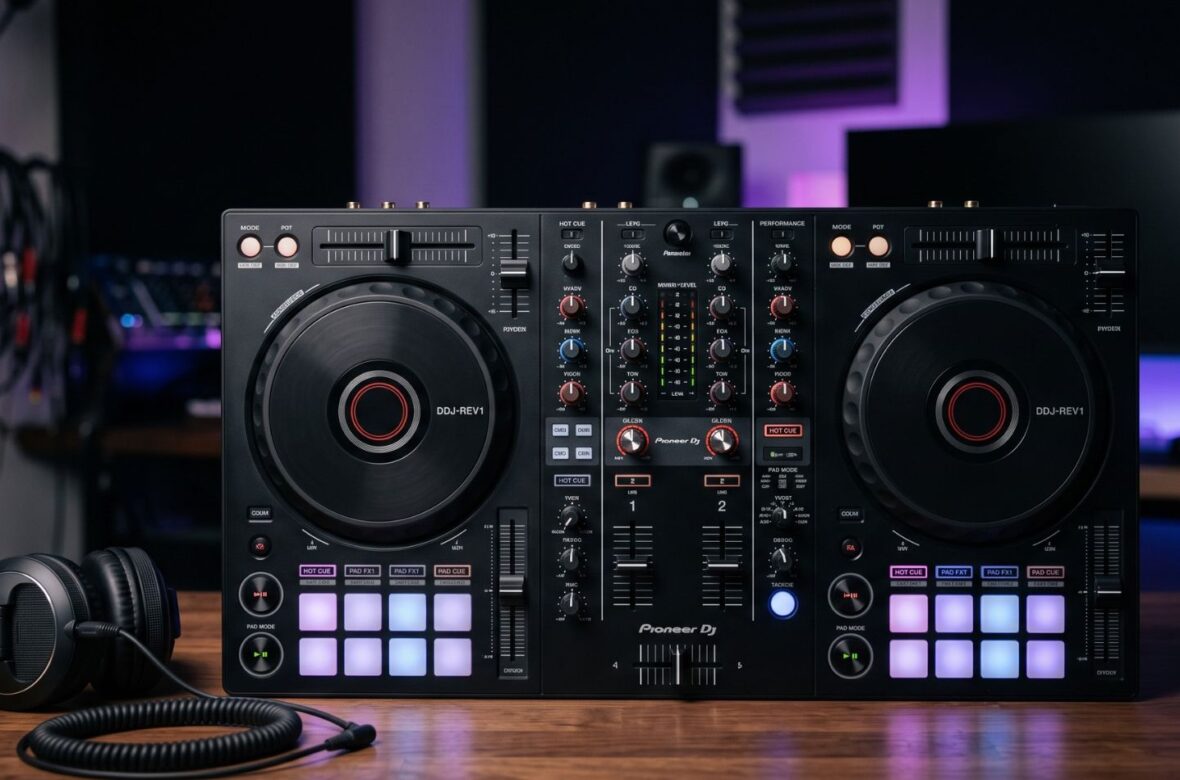
The DDJ-REV1 is the odd one out in Pioneer’s beginner range — and that’s the point. While the FLX4 and FLX2 copy the classic club layout, the REV1 shrinks a battle/scratch setup (two turntables turned sideways plus a DJM-S-style scratch mixer) into an affordable first controller. If your dream is cutting, scratching, and open-format routines on Serato, this is your starting line. If it’s not, you’ll want something else. Here’s an honest overview to tell which camp you’re in.
The DDJ-REV1 is an affordable 2-channel, battle-style Serato controller built for beginners who want to scratch. It mirrors a pro DJM-S mixer and PLX turntable layout, with large scratch-ready jogs, paddle FX, a Tracking Scratch training aid, and a mic input for streaming. It’s the best cheap entry into scratch DJing — but its committed battle layout won’t suit those who want a club-style controller, who should get the DDJ-FLX4.
DDJ-REV1 at a Glance
The key specs and what they mean for a beginner:
| Spec | DDJ-REV1 | What it means for you |
|---|---|---|
| Channels | 2 (controls 4 decks in software) | Two-deck mixing with extra deck access |
| Layout | Battle / scratch-style | Mirrors pro turntable + DJM-S setup, not a club layout |
| Software | Serato DJ Lite (Serato-focused) | Some features need a paid Serato DJ Pro upgrade |
| Jog wheels | Larger (DDJ-SR2 size) | Bigger surface = better for scratching |
| Pitch faders | 60mm, horizontal (top) | Finer tempo control; turntablist position |
| FX | Lever/paddle FX | Fun, intuitive, easy to see at a glance |
| Scratch aids | Tracking Scratch, Scratch Bank | Helps you learn cuts; doesn’t do it for you |
| Mic input | Yes (mixed into master for streaming) | Rare at this level — great for livestreams |
| Power / build | USB bus-powered, plastic | Portable; entry-level feel but sturdy enough |
(Pricing varies by region — confirm the current Thailand/local price before buying.)
The Defining Feature: A Real Battle Layout
What makes the REV1 unique in the beginner space is that it doesn’t compromise on the battle layout. The pitch faders run horizontally across the top (like turntables rotated 90°), and the performance pads sit in the mixer section, exactly mirroring a pro DJM-S scratch mixer. This matters for one big reason: the muscle memory you build transfers directly to professional scratch gear. If your goal is eventually a DJM-S11 and real turntables, the REV1 is genuinely step one of that path — unlike a club-layout controller, which teaches a different workflow.
What’s Good About the REV1
Built for Learning to Scratch
The larger jog wheels (the same size as the higher-end DDJ-SR2) give you real room to cut, and the Tracking Scratch feature is a clever training aid — it returns the track to the cue point when you lift your hand, so you can practise patterns without constantly resetting. Crucially, it helps you learn rather than doing the scratching for you. The Scratch Bank (letting you load samples to pads) is a feature that used to be Serato DJ Pro-only.
Fun, Intuitive Paddle FX
The Lever/paddle FX are a highlight — pull down for a momentary effect, flick up to lock it on and free your hands. They’re simple, visual, and genuinely enjoyable, and the Serato FX selection is solid (and expandable). It’s one of the better FX implementations at this price.
Mic Input for Streaming
For the first time at this entry level, the REV1 mixes microphone audio into the master and sends it to Serato — so you can talk over your sets for livestreams or social content without any external mixer or soundcard. If you plan to stream, that’s a real bonus the FLX2 doesn’t offer.
What to Watch Out For
- The battle layout is a commitment. If you want a traditional club workflow (and to learn on something like a CDJ setup), this is the wrong controller — get the DDJ-FLX4 instead.
- Serato DJ Pro upgrade is a hidden cost. It ships with Serato DJ Lite; some features (and recording your mixes) need the paid Pro upgrade. Budget for that if you’ll want it.
- Single-colour pads. No RGB, so you can’t colour-code hot cues at a glance — a small miss for battle DJs.
- Plastic, entry-level build. Sturdy enough, but it feels like a beginner unit; small pads can feel cramped for large hands.
- No aux inputs. It’s purely a controller — nothing extra to plug in.
DDJ-REV1 vs DDJ-FLX4: Which One?
These are the two Pioneer beginner controllers people compare, and the choice comes down to workflow, not quality:
- Choose the REV1 if: you specifically want to learn scratching and open-format, you’re committed to Serato, and you might aim for a DJM-S + turntables setup later. The transferable battle muscle memory is the whole point.
- Choose the FLX4 if: you want a versatile club-style layout, prefer rekordbox/Serato flexibility, or aren’t sure yet what kind of DJ you want to be. It’s the safer all-rounder for most beginners.
Not sure which software fits either way? Read rekordbox vs Serato — it’s especially relevant here, since the REV1 is built around Serato.
Who the REV1 Is Really For
It’s a clear recommendation for one type of person: the beginner who knows they want to scratch and play open-format on Serato, on a budget. For that DJ, nothing else at this price offers a genuine battle layout. For everyone else — especially anyone leaning toward club/festival-style mixing — the FLX4 is the better first controller.
A Note From NaJade
I play progressive house on a club-style layout, so the REV1 isn’t my world — but I really respect what it is. Pioneer didn’t water down the battle format to make it beginner-friendly; they committed to it, and that honesty is exactly why it works. Here’s my advice: be honest with yourself about the DJ you want to become. If you watch scratch routines and turntablism videos and think “that’s what I want to do,” the REV1 is a brilliant, affordable on-ramp that builds the right habits from day one. But if you’re picturing yourself playing melodic sets on rooftops and in clubs, don’t buy the REV1 just because it looks cool — the club-layout FLX4 will serve you far better. Match the tool to your actual dream, not the hype. And whichever you choose, the scratching and mixing still come from practice, not the gear.
Compare it with the rest of the lineup in my complete Pioneer DJ controller guide, or the wider DJ gear for beginners series. Want to learn to scratch or mix properly? My DJ lessons run in person in Bangkok or online over Zoom.
Frequently Asked Questions About the DDJ-REV1
Is the DDJ-REV1 good for beginners?
What’s the difference between the DDJ-REV1 and DDJ-FLX4?
Is the DDJ-REV1 good for scratching?
What software does the DDJ-REV1 use?
Can you use a microphone with the DDJ-REV1?
Should I buy the DDJ-REV1 if I want to play in clubs?
About the Author
NaJade is a Bangkok-based DJ playing progressive house, melodic EDM, pop, and Thai music across clubs, rooftops, and weddings in Thailand. He teaches beatmatching and mixing to beginners both in person in Bangkok and online over Zoom. When he’s not behind the decks, he’s documenting the journey on YouTube, Instagram, and TikTok.