
By NaJade · DJ in Bangkok · Published September 29, 2026
The skill that separates a DJ who plays music from one who throws a party.
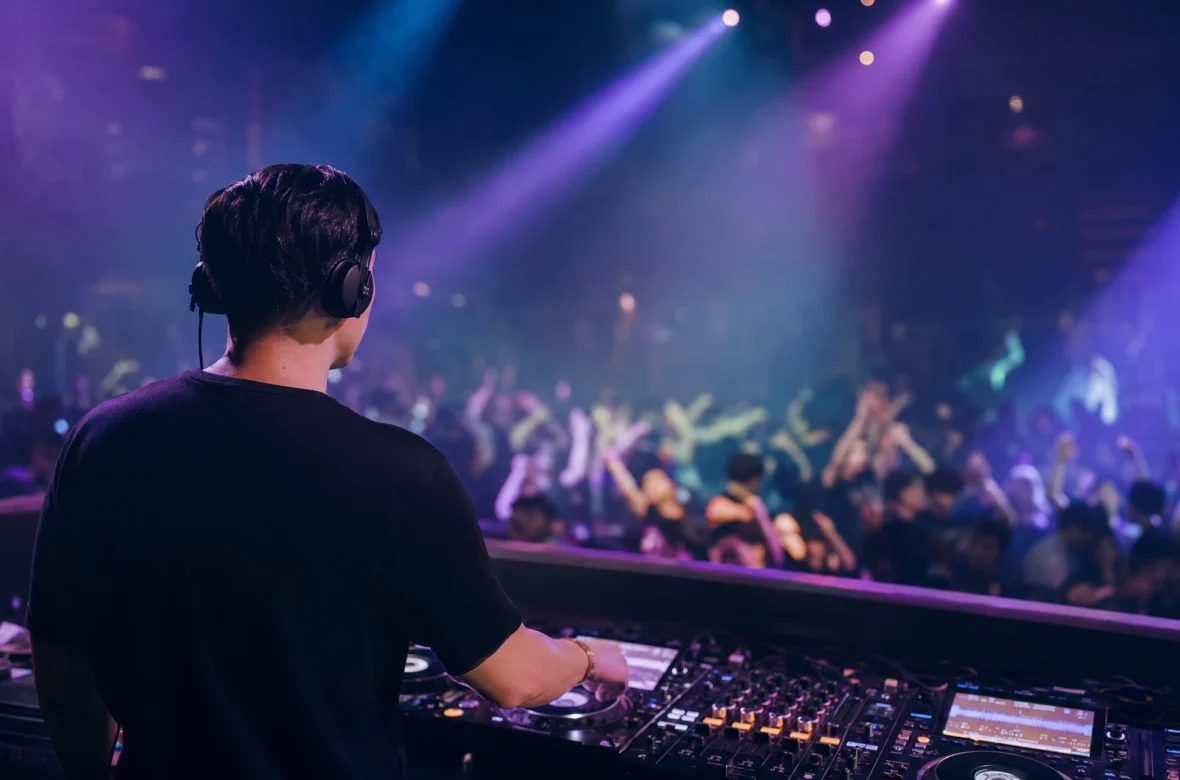
You can beatmatch perfectly, EQ like a surgeon, and have the cleanest transitions in the city — and still clear a dance floor. Why? Because technical skill gets you able to DJ, but reading the crowd is what makes you good at it. This is the part no controller teaches you, and it’s the most important skill you’ll ever develop. Here’s how to start.
To read a crowd as a DJ, arrive early to observe the room, treat the audience as one shared energy rather than individuals, earn their trust with familiar tracks before experimenting, watch their body language (especially the feet) for real-time feedback, and build energy gradually toward a peak. Your job is to serve the room, not to show off your taste. Let’s unpack that.
Reading the Room Starts Before You Play
Most beginners only think about the crowd once they’re already behind the decks. The pros start way earlier. Arrive at least 20–30 minutes before your set, stand in the room, and feel it as a guest would. What’s the energy? Who’s here — age, vibe, what they’re wearing, what they’re reacting to? What’s the previous DJ playing, and what’s landing?
You can even do homework before you arrive: check the venue’s social media, talk to the management or other DJs, and get a sense of the usual crowd and sound. As We Are Crossfader points out, the reading process begins long before your first track.
Think of the Crowd as One Organism
This single mental shift will change how you play. Instead of seeing a room full of separate individuals with different tastes, see the crowd as one shared energy — a single organism you’re in conversation with. You’re not trying to please every person; you’re trying to move the collective mood. When you think this way, you stop panicking about the one guy standing still and start steering the room as a whole.
Inherit the Momentum — Don’t Cause Whiplash
If you’re following another DJ, you’re inheriting their momentum. The worst thing you can do is jump behind the decks and immediately switch the vibe into something wildly different — it gives the room whiplash and you’ll watch the floor empty. Start close to where the energy already is, get the room on your side, then gradually steer it where you want to go. Respecting the momentum you’re handed is a sign of a DJ who understands the bigger picture.
Earn Trust Before You Experiment
There’s an unspoken agreement in every venue: people paid to be there and they expect a good night. If you push your own niche taste too hard, too early — opening with obscure leftfield records to a commercial crowd — the room pulls back. Digital DJ Tips tells a great cautionary story of a DJ who played a set so dark and claustrophobic that the crowd literally walked out to the other room.
The move instead: earn trust first. Give the room some familiar tracks they connect with. Once they feel you understand them and you’re delivering a good night, they’ll happily follow you when you start steering toward your own sound. Trust first, experiments second.
Watch the Feet, Not the Faces
Real-time feedback is written all over the room if you know where to look:
- Watch the feet. Are people shifting their weight, moving, dancing? Bodies don’t lie the way polite faces do.
- Is the floor filling or emptying? People vote with their feet — if the floor’s thinning, change something.
- Are they leaving for drinks or coming back to dance? A bar exodus mid-track is a clear signal.
- Who’s dancing hardest, and why? Notice what track or energy is driving it, and give the room more of that thread.
- Watch reactions to each new track. Mix something in and read the response immediately — the room tells you instantly whether it worked.
Build Energy — and Save the Peak
When the crowd’s loving it, there’s a huge temptation to drop all your biggest tracks at once. Resist it. A great set is a journey, not a constant peak. If you play your biggest record in the first 20 minutes, where do you go from there?
Build energy gradually, give the room peaks and breathers, and save your biggest moment for when anticipation is highest. Knowing exactly when to drop the best track of the night — reading that the room is at maximum tension and then releasing it — is the difference between a good set and one people talk about for years.
You’re an Entertainer First
Here’s the mindset that ties it all together: as a DJ, you’re an entertainer serving the room. Your technical skills exist to serve the crowd’s experience, not to display your taste or ego. The best DJs listen more than they plan and feel more than they think. Reading a crowd isn’t guessing or mind-reading — it’s observing, responding, and playing toward the energy in front of you. Get that right and the technical stuff becomes invisible, which is exactly how it should be.
A Note From NaJade
This took me longer to learn than any technical skill. Early on I was so focused on my mixing that I forgot to actually look up at the room. The night it clicked, I stopped playing the set I’d planned and started playing the set the room wanted — and the difference was night and day. Now I plan less and watch more. My honest advice: take every chance to play in front of real people, no matter how small the crowd, because reading a room is a skill you can only build live. Bedroom practice makes you technically good; the dance floor makes you a DJ.
Reading a crowd is one of the things I focus on most with students who already have the basics down — it’s a big part of my DJ lessons, in person in Bangkok or online over Zoom. And if you’re still building the technical foundation, work through beatmatching and mixing two songs together first, so the mechanics are automatic and you’re free to watch the room.
Frequently Asked Questions About Reading a Crowd
What does it mean to read a crowd as a DJ?
How do beginner DJs learn to read a crowd?
What should a DJ watch for in the crowd?
Should a DJ play their own taste or what the crowd wants?
When should a DJ play their biggest track?
Why did I clear the dance floor even though my mixing was clean?
About the Author
NaJade is a Bangkok-based DJ playing progressive house, melodic EDM, pop, and Thai music across clubs, rooftops, and weddings in Thailand. He teaches beatmatching and mixing to beginners both in person in Bangkok and online over Zoom. When he’s not behind the decks, he’s documenting the journey on YouTube, Instagram, and TikTok.