
By NaJade · DJ in Bangkok · Published September 28, 2026
Stem separation went from a gimmick to a standard feature in about three years. Here’s what AI actually does well for DJs now, what it does badly, and where the line sits.
AI in DJing is discussed either as an existential threat or as marketing noise, and neither is right. The honest position in 2026 is that one AI capability has genuinely changed what’s possible behind the decks — stem separation — and most of the rest is convenience. Real-time stems let you pull vocals, drums or bass out of any track in your library on the fly, which used to require an official acapella that mostly didn’t exist. The technology is moving fast enough that it’s now shipping in speakers, not just software. Here’s what’s worth your attention.
Stem separation is the one that matters. It splits any track into vocals, drums, bass and melody in real time, which means every record in your library is now potentially an acapella or an instrumental. Everything else — auto-tagging, key detection, playlist suggestions, marketing tools — is convenience rather than capability. None of it replaces knowing what to play.
Stem Separation: The One That Changed Things
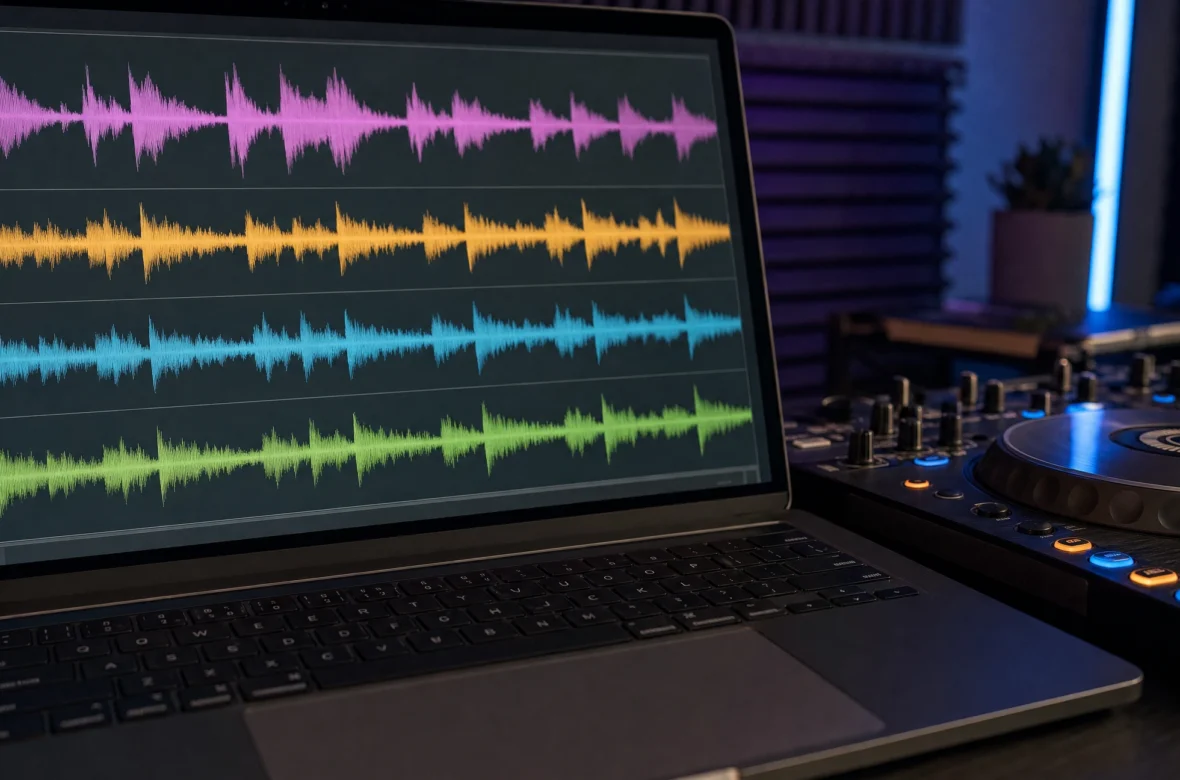
Stem separation uses AI to split a finished stereo track into its component parts — typically vocals, drums, bass and melody — and it now runs in real time on a normal laptop. VirtualDJ’s current engine is built specifically for clarity and speed on modern machines, and David Guetta has publicly praised real-time stems for acapellas and on-the-fly mashups.
The pace is telling. JBL’s recent BandBox Solo and Trio speakers ship with built-in “Stem AI”, letting you strip vocals, guitar or drums from a track in real time while jamming, with no laptop involved at all. Meanwhile DJ.Studio won the NAMM 2026 TEC Award in the DJ Production Technology category, beating established hardware brands — a sign the “DAW for DJs” idea has moved beyond early adopters.
What it actually lets you do
- Acapellas from anything. You no longer need an official vocal release — every track in your library is a potential acapella.
- Instrumentals on demand, which makes a vocal clash in a long blend solvable rather than fatal.
- Mashups on the fly — vocal from one record over the instrumental of another, live.
- Cleaner transitions by removing a competing element rather than EQing around it — see transition techniques.
- Fewer purchases. It extends the usefulness of music you already own rather than replacing the need to buy it — see where to buy music as a DJ.
The honest limitations
Separation quality varies by track, and you’ll see marketing built around technical scores like SDR. Those metrics aren’t useless, but they’re not the same as sounding good in a mix. Dense, heavily compressed or effect-laden material separates worse than sparse material, and artefacts that are inaudible in headphones can become obvious on a big system.
Test it before you rely on it. A stem that sounds acceptable at home can fall apart in a room, which is an unpleasant thing to discover mid-set.
The Rest of the AI Landscape
| Tool type | Genuinely useful? |
|---|---|
| Stem separation | Yes — the one real capability shift |
| Key and BPM detection | Yes, but not new; still verify manually |
| Auto beat-gridding | Useful; still check grids on live-drum tracks |
| Library auto-tagging | Time-saving; your own tags are better |
| Playlist and track suggestions | Mixed — good for discovery, poor for taste |
| Auto-mixing / sync sets | Works technically; produces nothing memorable |
| AI mastering for mixes | Emerging; useful for podcast-style uploads |
| AI video and marketing tools | Real time-saver for social content |
The pattern is clear enough. AI is strong at the mechanical parts of DJing and weak at the judgement parts. It can tell you a track is 126 BPM in A minor. It cannot tell you that this room needs one more patient record before you lift it.
Where I’d Draw the Line
- Use AI for preparation, not performance decisions. Let it analyse, tag and separate. Don’t let it choose.
- Verify everything it labels. Key detection and beat grids are both confidently wrong sometimes, and a bad grid ruins loops and effects — see organising your library.
- Learn the skill before the shortcut. Stems can hide a vocal clash you should have heard coming. Learn to hear it.
- Be careful with AI-generated music in paid sets — the rights position is unsettled and venues increasingly care.
- Don’t outsource your taste. Recommendation engines converge on the popular, which is the opposite of what makes a selector interesting.
A Note From NaJade
I use stems constantly and I’m genuinely enthusiastic about them, so this isn’t a suspicious-of-technology position. What I’d say is that AI has made the easy parts of DJing easier and hasn’t touched the hard part at all. Beatmatching was automated years ago and it didn’t produce a generation of great DJs; stems won’t either. The hard part was always selection and timing — knowing which record, and knowing when — and no tool has come close to that, because it requires watching a specific room full of specific people on a specific night. The practical risk I’d flag is subtler than “AI replaces DJs.” It’s that these tools make it very easy to never develop your ear. If stems solve every vocal clash for you, you never learn to hear one coming, and that’s a skill you’ll want on the night the software does something strange. Use the tools. Learn the thing underneath them anyway.
Related: where to buy music as a DJ, organising your DJ music library, the DJ software guide, and how to use DJ effects.
Frequently Asked Questions
What AI tools are actually useful for DJs?
What is stem separation for DJs?
Is stem separation good enough for a live set?
Will AI replace DJs?
Should I trust AI key and BPM detection?
Can I play AI-generated music in my sets?
About the Author
NaJade is a Bangkok-based DJ playing progressive house, melodic EDM, pop, and Thai music across clubs, rooftops, and weddings in Thailand. He teaches beatmatching and mixing to beginners both in person in Bangkok and online over Zoom. When he’s not behind the decks, he’s documenting the journey on YouTube, Instagram, and TikTok.