
By NaJade · DJ in Bangkok · Published September 29, 2026
A mobile DJ owns their gear, their clients, and their income. Here’s how to turn DJing into a real, portable business.
Club DJs play the venue’s system and the venue’s crowd. A mobile DJ shows up with everything — speakers, decks, mic, lights — and turns an empty function room into a party. It’s less glamorous than headlining a festival, but it’s also where a lot of DJs build steady, real income: weddings, birthdays, corporate events, and private functions happen every weekend, and they need someone reliable. Here’s how to become a mobile DJ and build it into a business.
To become a mobile DJ, you supply your own portable setup — controller, speakers, microphone, and lighting — and perform at private events like weddings, parties, and corporate functions. Master open-format mixing and a broad music library, invest in reliable gear with backups, set clear package pricing, handle the business basics (licensing and insurance), and market yourself through a website, social media, and word of mouth.
What Is a Mobile DJ?
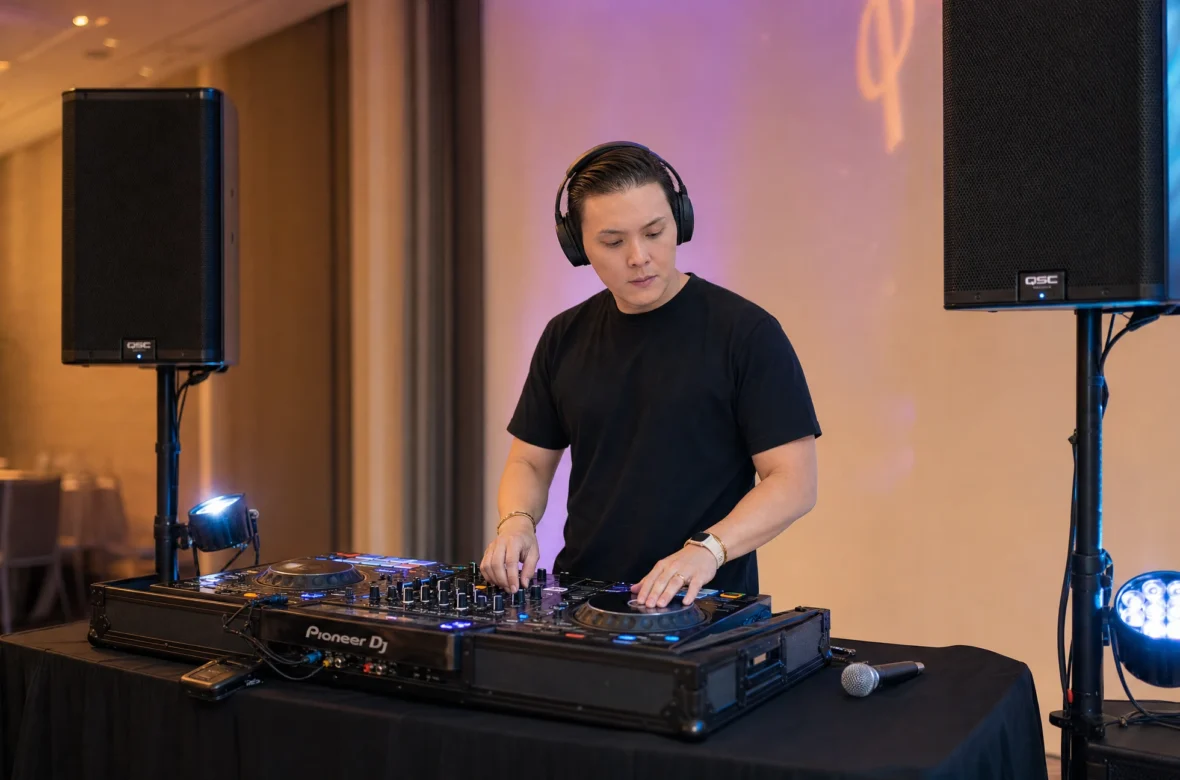
A mobile DJ is a DJ with a self-contained, portable setup who performs at private venues and events rather than resident club nights. You bring your own sound system, lighting, and accessories, and you adapt to whatever the event needs.
Mobile DJ vs. Club DJ
The core skill — mixing music and reading a room — is the same. The differences are practical: a club DJ uses the house system and plays to a crowd the venue drew, while a mobile DJ supplies all the gear and plays to a private guest list. Mobile work needs more upfront investment, but it offers far more consistent, well-paid work. You’re also on the microphone much more than a club DJ — you’re often the de facto host.
It’s a Real Craft (Don’t Let Anyone Tell You Otherwise)
Some club-focused DJs dismiss mobile work as “not real DJing.” Ignore that. The professionalism, equipment knowledge, open-format range, and people skills required to run a mobile gig well are a serious skill set — and plenty of famous DJs started exactly this way.
Step 1: Get Your Skills Solid First
Before you take paid bookings, your mixing needs to be dependable — people are paying for a great party, and a night of trainwrecks kills the vibe and your reputation. Two priorities:
- Clean, reliable mixing. Smooth transitions and solid beatmatching matter more than tricks. Drill them with deliberate practice until they’re muscle memory.
- Open-format range. Mobile gigs demand versatility — one event can span decades and genres. The more comfortable you are jumping from a slow first dance to peak-time pop to a parent’s request, the more bookable you are.
Step 2: Build Your Mobile Setup
This is the biggest difference from club DJing — and your biggest expense. You need a complete, portable, reliable rig. Here’s the essentials checklist:
| Gear | Why you need it | Tip |
|---|---|---|
| DJ controller / media players | Your core mixing instrument | A reliable 2-channel unit is plenty to start |
| Powered speakers (PA) | The venue won’t provide sound | Buy the best clarity your budget allows; size to the room |
| Subwoofer | Fills the dance floor | Worth it once you do bigger parties |
| Wireless microphone(s) | Announcements, toasts, hosting | Two is ideal — one for you, one for speeches |
| Headphones | Cueing the next track | Closed-back, comfortable for long sets |
| Dance-floor lighting | Sets the party mood | A simple effect light transforms a plain room |
| Cables & stands | Connects and elevates everything | Carry labelled spares of every cable |
| Backup system | No second chances at events | Spare USB, laptop, or a small backup controller |
| Transport & cases | Protects gear, gets you there | Make sure it all fits your vehicle |
Rent Before You Buy
When you’re starting, renting a PA for your first few gigs is smart: you avoid a big commitment, you can afford better gear than you could buy, and you get to try different rigs to learn what suits you. Buy once you know the work is coming and you know what you actually need.
Build a Broad Music Library
Your library is your toolkit. Mobile DJs need deep, well-organised, owned music across genres and eras — don’t rely on streaming and venue WiFi at a live event. Curate quality over sheer quantity, and keep adding current hits so your sets stay fresh.
Step 3: Handle the Business Basics
Once you’re hiring yourself out, you’re running a business — treat it like one. Exact rules vary by country and locality, so check what applies where you are, but generally consider:
- Register your business and follow local trading and tax rules; an accountant’s advice early on pays for itself.
- Insurance. Look into DJ/equipment and public liability insurance in case of accident or damage — many venues require it.
- Music licensing. Playing copyrighted music at public/commercial events can require the appropriate performance licences. Check your local requirements to avoid fines.
- Contracts and deposits. Use a simple contract and take a deposit for every booking.
Step 4: Set Your Pricing and Packages
Mobile DJ pricing usually works best as flat packages, not hourly. A common structure is a set base rate for a block of time (often around four hours) with an additional hourly rate for overtime, and a travel fee beyond a certain distance. Build tiered packages (basic / premium) so clients can self-select by budget, and price for the whole job — setup, travel, performance, and teardown. Weddings and corporate events typically command higher rates than house parties because they demand more. For the full framework, see how much a DJ should charge.
Step 5: Get Clients and Market Yourself
With skills and gear sorted, you need bookings. The proven routes for mobile DJs:
- Work for an established DJ company first. Multi-op companies constantly need reliable DJs and will book the gigs for you — a fast way to gain paid experience, footage, and confidence before going solo.
- Start with friends and family. Offer early events at a low rate to build a portfolio, gather photos/video, and earn your first reviews.
- Build a professional website with your packages, past events, mixes, and a clear contact/booking page — it’s where serious clients judge you.
- Use social media and event marketplaces consistently, with branding that matches your site. Post real event clips and testimonials.
- Collect testimonials religiously and partner with other event vendors (photographers, planners, venues) who refer DJs — see how to network as a DJ.
Word of mouth and recommendation remain the most powerful tools you have — so being reliable, easy to work with, and genuinely good at the gig is the best marketing of all.
A Note From NaJade
I used to think mobile DJing was the “less cool” path — until I did a few and realised it’s some of the most rewarding work there is. There’s a real craft to walking into a bare room with a car full of gear and, a few hours later, looking up at a packed, happy dance floor that you built from nothing. It taught me more about reading people, hosting, and staying calm under pressure than any club night ever did. If you’re reliable, prepared, and you treat every client’s event like it matters, mobile DJing can become a genuine business and a steady income while you chase the bigger dreams too. Start with solid skills, borrow or rent your first rig, say yes to that friend’s party — and build from there.
Mobile DJing pulls together everything in this series — pair it with becoming a wedding DJ (your highest-value mobile work), pricing, and building your brand. If you’re in Thailand and want to hire a mobile DJ for your event, see my services. Want to build the skills first? My DJ lessons run in person in Bangkok or online over Zoom.
Frequently Asked Questions About Becoming a Mobile DJ
What is a mobile DJ?
What equipment do I need to be a mobile DJ?
How much does it cost to start a mobile DJ business?
How do mobile DJs get clients?
How much should a mobile DJ charge?
Do I need a licence or insurance to be a mobile DJ?
About the Author
NaJade is a Bangkok-based DJ playing progressive house, melodic EDM, pop, and Thai music across clubs, rooftops, and weddings in Thailand. He teaches beatmatching and mixing to beginners both in person in Bangkok and online over Zoom. When he’s not behind the decks, he’s documenting the journey on YouTube, Instagram, and TikTok.