
By NaJade · DJ in Bangkok · Published September 29, 2026
This guide is part of DJ mixers explained: the complete guide.
The club layout without the club price — four channels, real Pioneer effects, and a built-in soundcard for a fraction of a flagship. The sensible choice most DJs overlook.
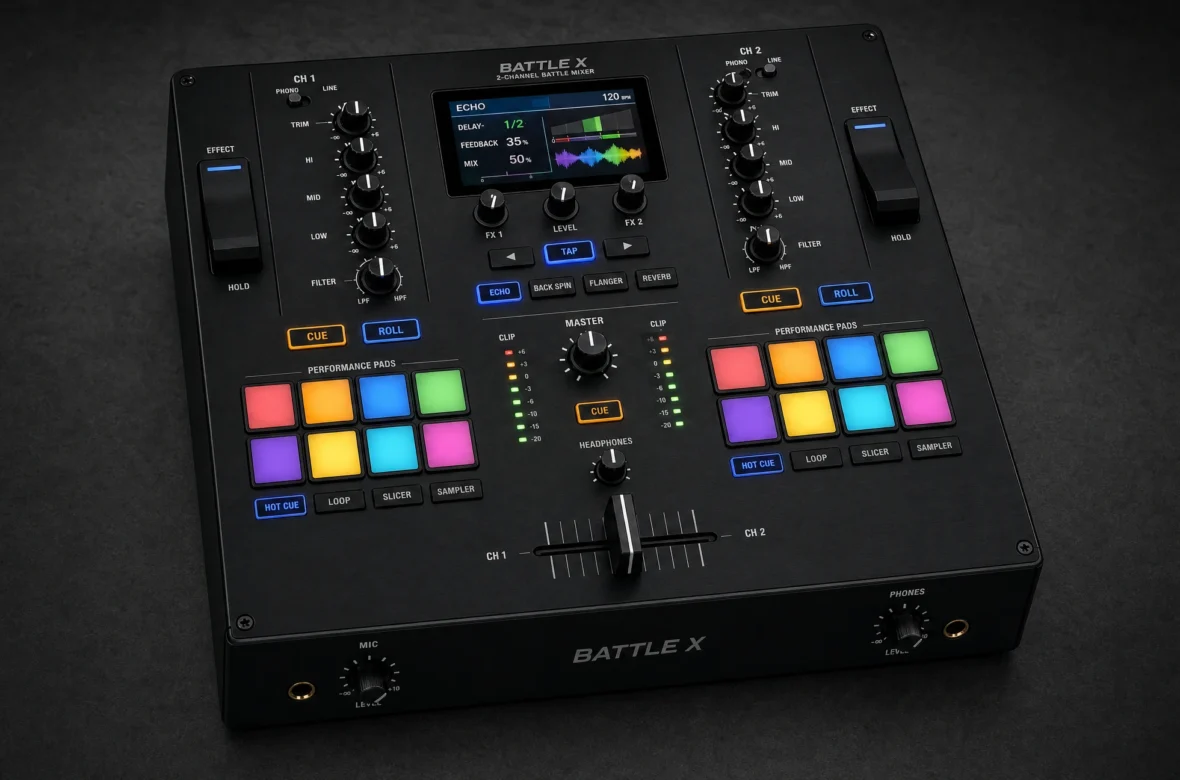
Everyone talks about the flagships, but the Pioneer DJ DJM-750MK2 is the mixer that actually fits most people’s lives. It’s a four-channel mixer with the familiar Pioneer club layout, Sound Color FX, Beat FX, a built-in multi-channel soundcard, and a Magvel crossfader — at a small fraction of what a DJM-A9 costs. For a home separates rig, a small venue, or a mobile setup, it delivers the workflow you’ll meet in booths without the outlay that makes no sense outside them. Here’s the honest picture, including where it’s been trimmed.
The Pioneer DJM-750MK2 is the affordable 4-channel club-layout mixer — Sound Color FX, Beat FX, a built-in multi-channel soundcard, a Magvel crossfader, and a rekordbox licence, at a fraction of flagship pricing. It’s the sensible choice for home rigs, small venues, and mobile DJs. The catches: a smaller display, fewer premium components, and sound a clear step below the DJM-A9 and DJM-900NXS2.
DJM-750MK2 at a Glance
The key specs and what they mean for you:
| Spec | DJM-750MK2 | What it means for you |
|---|---|---|
| Type | 4-channel club-layout mixer | Booth workflow at a realistic price |
| Layout | Familiar Pioneer arrangement | Skills transfer straight to club DJMs |
| Sound Color FX | Per-channel colour effects (filter, noise and more) | The one-knob effects DJs use constantly |
| Beat FX | Tempo-synced delays, echoes, reverbs and more | Full Pioneer effects vocabulary |
| Soundcard | Built-in multi-channel USB audio | DVS and laptop use with no extra interface |
| Crossfader | Magvel Fader | Smooth and durable; scratch-capable |
| Software | rekordbox licence included; works with other DVS software | Start performing without extra spend |
| Display | Small, mid-sized readout | Less informative than flagship screens |
(Specifications and bundled software change between revisions and regions — confirm current details and local pricing before buying.)
Why This Is the Sensible Mixer
Here’s the argument nobody in gear marketing wants to make: for most DJs, the difference between a DJM-750MK2 and a flagship shows up in a club and almost nowhere else. You get the same layout logic — I/O across the top, Sound Color FX and mic on the left, four channels with EQ down the middle, Beat FX on the right — so your hands learn the arrangement you’ll find in booths. You get the effects you’ll actually reach for. You get a soundcard so rekordbox or Serato DVS works out of the box. What you don’t get is the top-tier converter quality and premium components, which matter enormously on a festival system and very little in a bedroom.
What’s Great About the DJM-750MK2
The Club Layout, Learned Cheaply
The single most valuable thing this mixer gives you is transferable muscle memory. Practise on a 750MK2 and stepping onto a DJM-900NXS2 or DJM-A9 in a booth requires essentially no adjustment — the controls are where you expect them. For a DJ working toward club gigs on a real-world budget, that’s worth more than any spec upgrade, and it’s the reason I’d steer most people here rather than toward a cheaper two-channel mixer with an unfamiliar layout.
Real Pioneer Effects, Not Cut-Down Ones
Sound Color FX gives each channel a single knob for filter, noise, and other colour effects — the control most house and techno DJs touch more than any other — and Beat FX provides the tempo-synced delays, echoes, and reverbs that define the Pioneer sound. These aren’t watered-down versions; they’re the effects vocabulary you’ll use in a club, available on a mixer costing a fraction of one.
Soundcard and Software Included
The built-in multi-channel USB soundcard means you can run DVS or laptop performance without buying a separate audio interface — a genuine saving and one less box in the booth. A rekordbox licence is included, so you can be performing without additional software spend. Combined with a Magvel crossfader and four channels for players, a microphone, and a spare input, it’s a complete centrepiece for a real working setup.
What to Watch Out For
- Sound is a clear step below the flagships. The A9’s 32-bit conversion and the 900NXS2’s audio circuitry are meaningfully better. On a big system you’d hear it; at home, far less so.
- The display is small and basic. Reviewers consistently note the mid-sized readouts on this tier are harder to read than flagship screens.
- Fewer premium components. Faders, knobs, and build feel a tier below club-standard units — fine for normal use, less bulletproof under nightly abuse.
- Fewer effects and routing options than a 900NXS2 or DJM-V10, and no advanced networking or remote features.
- Not a club-install mixer. Venues buy the flagship tier, so you won’t meet a 750MK2 in most professional booths — you’ll meet what it prepares you for.
- Consider a used 900NXS2 instead. With clubs upgrading to the A9, used flagship prices have fallen — worth comparing before you buy new at this tier.
Who the DJM-750MK2 Is Really For
It’s for the DJ building a first separates rig at home, for mobile and small-venue DJs who need four channels and a mic without flagship pricing, and for anyone practising toward club gigs who wants the right layout under their hands at a realistic cost. It’s also a sensible mixer for a bar or restaurant installation. Skip it if you’re playing large rooms where the sound difference tells (go A9 or used 900NXS2), if you scratch (DJM-S11), if you want analogue character (Xone:92), or if you’re running Denon SC players, where the X1850 integrates better.
A Note From NaJade
This is the mixer I’d recommend most often and the one that gets written about least, which tells you something about how gear coverage works. Most DJs reading mixer reviews are not playing festival systems — they’re building a rig at home, playing bars and weddings, and hoping to get into clubs. For that person the 750MK2 is close to ideal: the right layout to learn on, the effects you’ll actually use, a soundcard included, and thousands of baht left over for music, headphones, or lessons. The one genuinely competing option right now is a used 900NXS2, because clubs are offloading them as they move to the A9 — compare both before deciding, since a well-cared-for flagship at a similar price is a better mixer. Either way, buy the tier your rooms justify. The dancefloor responds to your selection and your timing, and it has never once asked about your converters.
Compare the whole range in my complete DJ mixer guide, or start with the best DJ controller for beginners if you’re not building separates. Want help setting up and learning a club-style rig? My DJ lessons run in person in Bangkok or online over Zoom.
Frequently Asked Questions About the DJM-750MK2
Is the DJM-750MK2 good enough for club gigs?
What’s the difference between the DJM-750MK2 and DJM-900NXS2?
Does the DJM-750MK2 have a built-in soundcard?
Is the DJM-750MK2 worth it over a 2-channel mixer?
Can you scratch on the DJM-750MK2?
DJM-750MK2 or a used DJM-900NXS2?
About the Author
NaJade is a Bangkok-based DJ playing progressive house, melodic EDM, pop, and Thai music across clubs, rooftops, and weddings in Thailand. He teaches beatmatching and mixing to beginners both in person in Bangkok and online over Zoom. When he’s not behind the decks, he’s documenting the journey on YouTube, Instagram, and TikTok.